Industrial Floor Coatings That Survive Forklifts and Chemicals
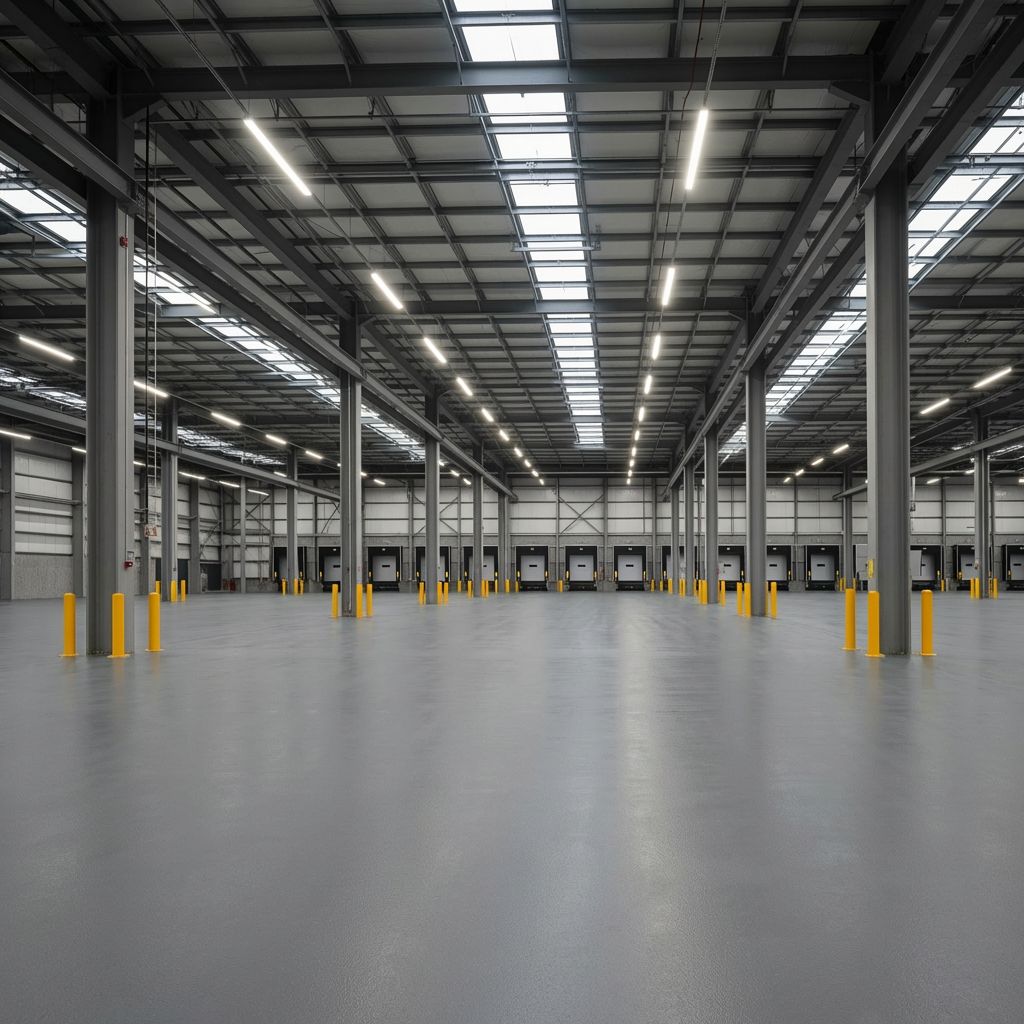
Warehouses, factories, and processing plants need floors that perform under extreme conditions. See what professional-grade coating systems look like installed.
Gallery
Industrial floors face abuse that would destroy residential coatings in weeks. Forklifts, pallet jacks, chemical spills, hot liquids, and constant foot traffic demand systems engineered for the job. The coatings shown here are 100% solids formulations applied at 20-60 mils — several times thicker than garage-grade products. Specialized systems exist for every industrial scenario: novolac epoxies for chemical processing, conductive systems for electronics, cold-rated urethanes for freezer storage, and MIL-spec products for military and aviation. The right specification starts with understanding the specific abuse the floor will face.
Featured Materials
Solid Epoxy
Industrial Gray Solid
High-build 100% solids for warehouse and manufacturing floors.
Try This on Your FloorUrethane
USDA White Urethane
FDA/USDA-approved for food contact surfaces. Cove base capable.
Try This on Your FloorQuartz Broadcast
Industrial Quartz
Maximum chemical and abrasion resistance. The toughest decorative option.
Try This on Your FloorChemical Resistant
Novolac Epoxy
Handles concentrated acids, solvents, and hot chemicals.
Try This on Your FloorVisualize Your Industrial Floor Project
Upload a photo of the facility. Show your client what the finished floor will look like before the crew arrives.
Try It On Your Floor