The Best Epoxy Flooring for Garages in 2026
A contractor's breakdown of every garage coating system, with real-world costs, durability, and when to recommend each one.
Why Epoxy Dominates Garage Flooring
10–20 yrs
System Lifespan
With proper prep and topcoat
$4–12/sq ft
Installed Cost Range
Solid color to metallic
$1,750–$5,400
Standard 2-Car Garage
400-500 sq ft typical
Epoxy coatings are the standard for garage floors because nothing else combines chemical resistance, impact durability, and visual appeal at a price homeowners can justify. Oil, brake fluid, road salt, hot tires, dropped tools. Epoxy handles all of it while looking good enough to make the garage feel like a finished room.
The garage floor coating market has expanded quickly over the last several years, driven by homeowners treating garages as extensions of living space rather than just car storage. For contractors, this is the highest-volume residential coating job you will see. Get good at garages and the rest of your coating business follows.
Margin Insight
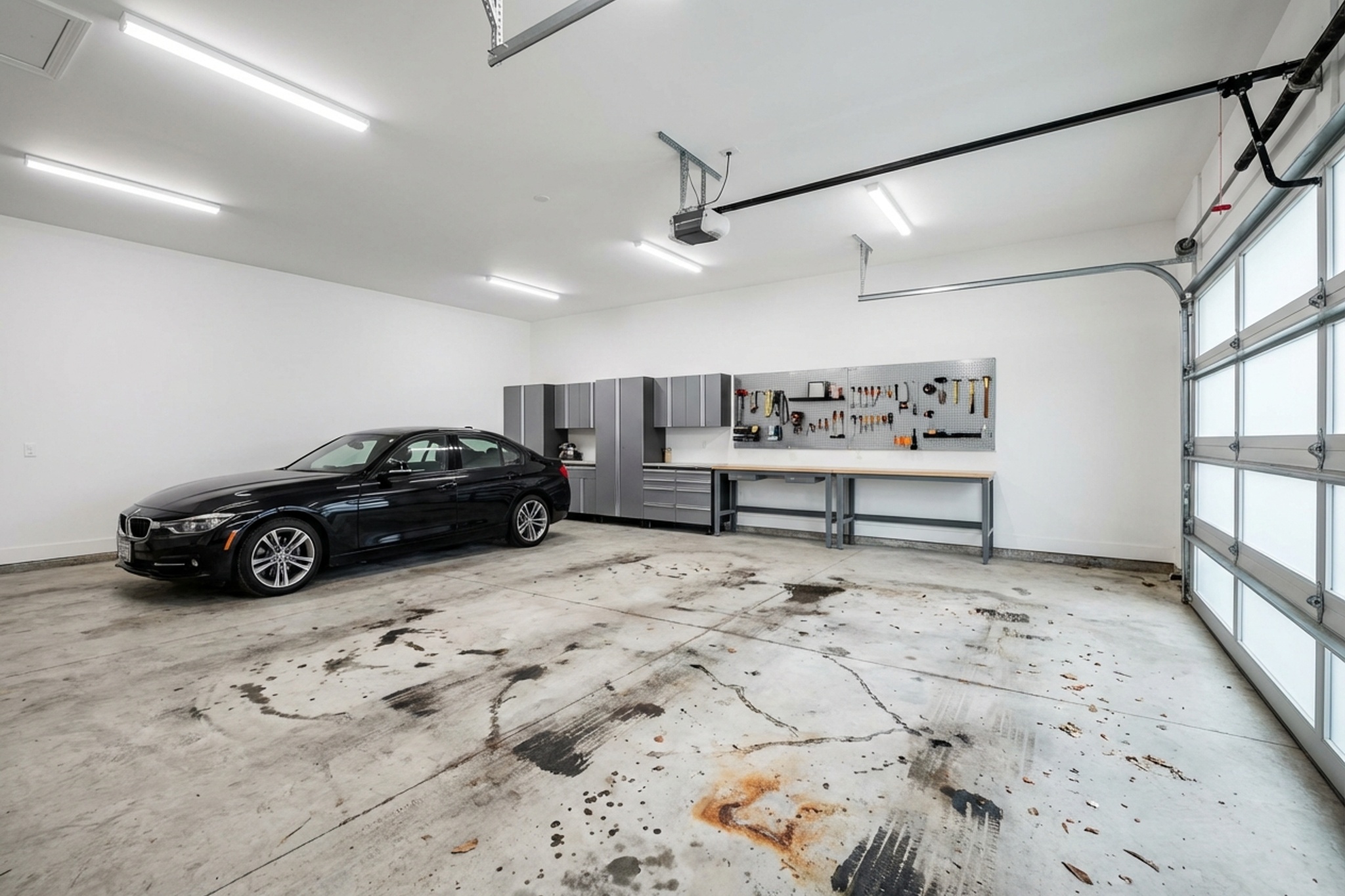
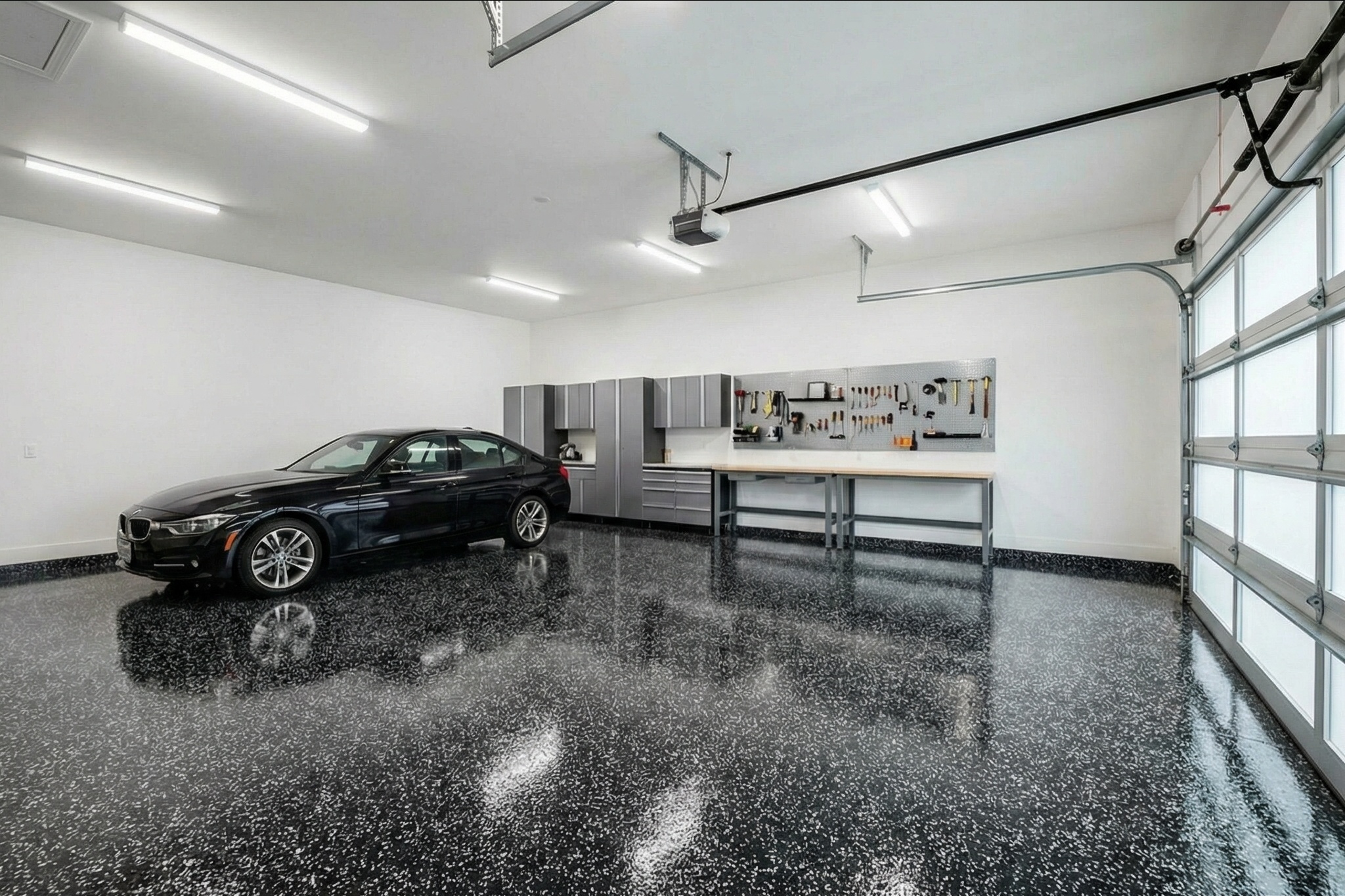
The most reliable upsell path: quote the client a flake system at $4-6/sq ft, then show a metallic visualization of their actual garage. The side-by-side visual comparison consistently moves homeowners toward the premium upgrade. On a 450 sq ft garage, the upgrade adds $1,800-2,700 in revenue for roughly the same labor hours.
The Four Main Garage Epoxy Systems
Flake Broadcast ($4-7/sq ft installed)
Flake systems are the bread and butter of residential garage work. Vinyl chips are broadcast into wet epoxy, creating a speckled texture that hides imperfections, adds slip resistance, and gives the floor visual depth. Colors range from conservative granite grays to bold multi-tone blends.
Material cost runs $1.50-3.00/sq ft for professional-grade product (Rust-Oleum EpoxyShield, Sherwin-Williams ArmorSeal, Torginol blends). A standard 2-car garage at 450 sq ft installs for $1,800-$3,150. Full broadcast (100% chip coverage where you cannot see the base coat) commands a $1-2/sq ft premium over partial broadcast and looks substantially better.
Metallic Epoxy ($8-12/sq ft installed)
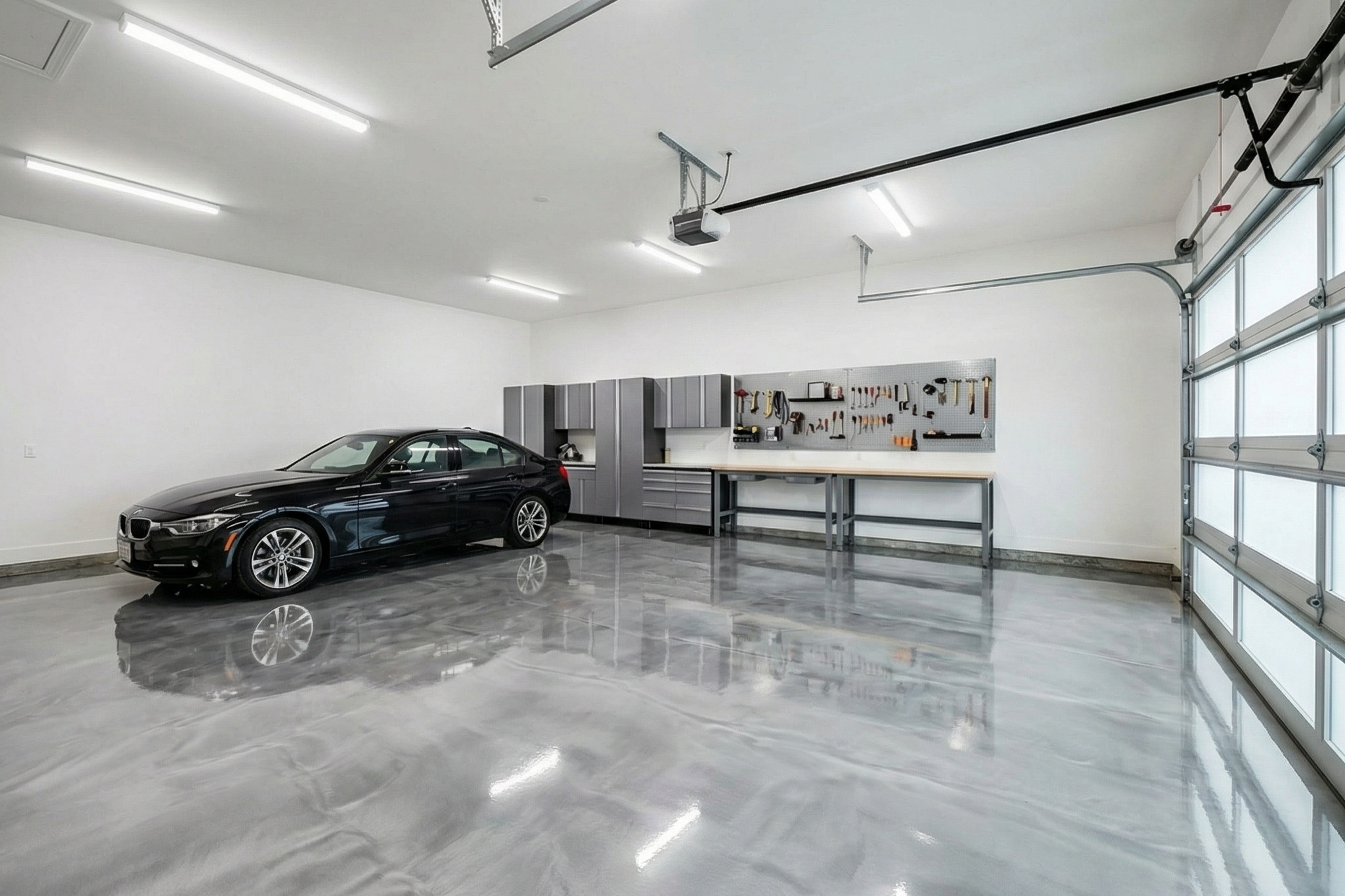
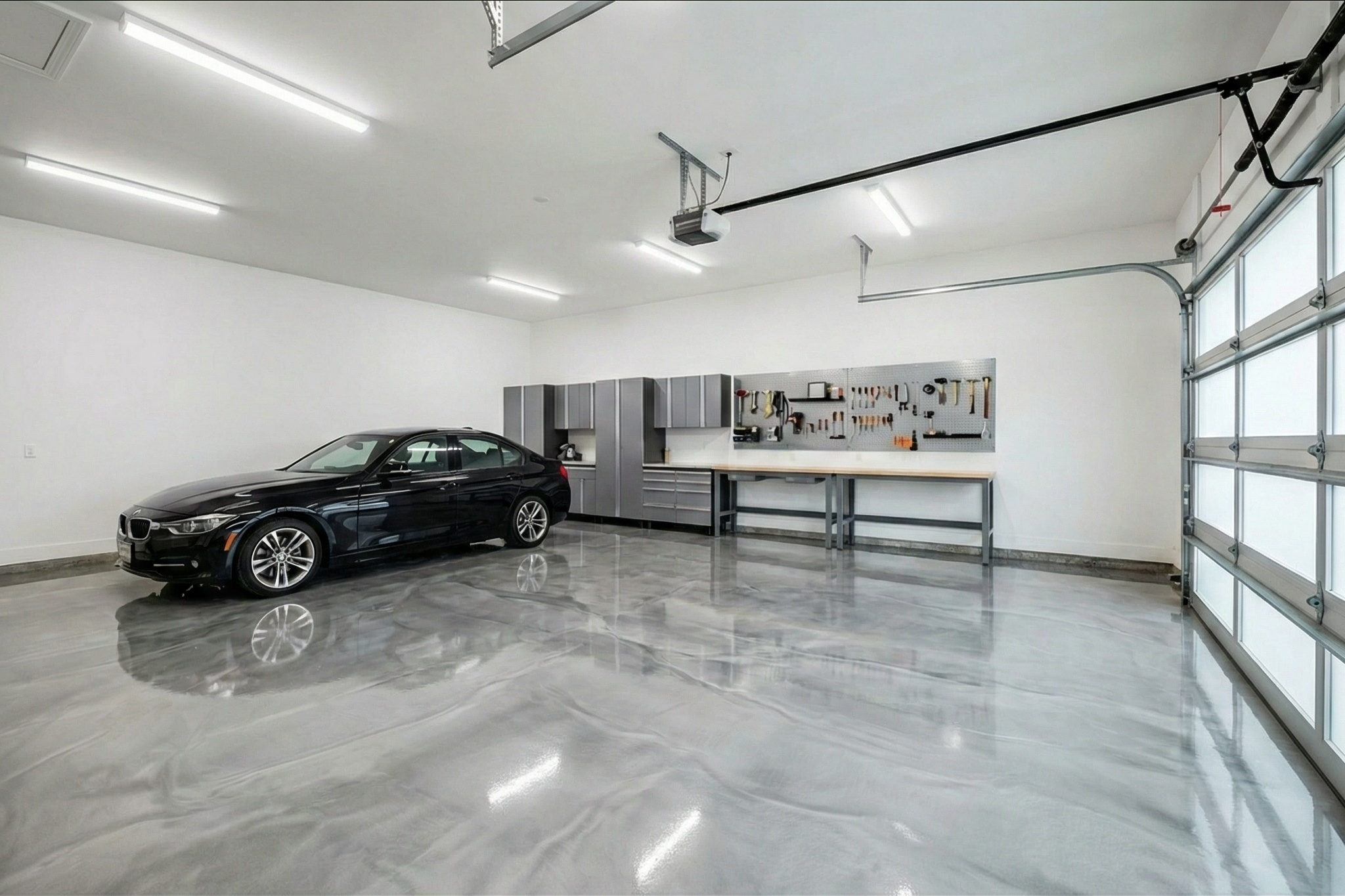
Metallic epoxy uses pigment powders suspended in clear resin to create flowing, marbled patterns. Each floor is one of a kind because the pigments shift and settle during application based on technique, temperature, and even airflow. Material cost runs $3-5/sq ft. A 450 sq ft garage installs for $3,600-$5,400.
Metallic is the highest-margin system because the visual result justifies the price to homeowners in a way that flake cannot. It photographs well, generates social media shares, and produces referrals. The tradeoff is technique: metallic requires more skill to apply consistently, and mistakes are harder to fix than with flake.
Solid Color ($3-5/sq ft installed)
A single color coat over primed concrete. The simplest system and the fastest to install. Popular for utility garages and commercial bays where protection matters more than aesthetics. Material cost: $0.50-1.50/sq ft. A 2-car garage runs $1,350-$2,250 installed. Thinner margins per job, but you can often complete two solid-color garages in the time one metallic takes.
Quartz Broadcast ($5-8/sq ft installed)
Colored quartz granules instead of vinyl chips. The result is a harder, more textured surface with better slip resistance than flake. Quartz systems are popular in the Midwest and Northeast where freeze-thaw cycles, road salt, and snowmelt demand extra durability. Material cost: $2-4/sq ft. A 2-car garage: $2,250-$3,600. Quartz is also the go-to for garages that double as workshops with heavy tool traffic.
The Hybrid System: Epoxy Base + Polyaspartic Top
The biggest shift in garage coatings over the past two years is the move toward hybrid systems. Instead of an all-epoxy job with a urethane topcoat, professional installers are laying down an epoxy primer and base coat for adhesion, then finishing with a polyaspartic topcoat for UV stability, abrasion resistance, and fast cure.
Polyaspartic cures in 2-4 hours versus overnight for epoxy topcoats. It does not yellow from UV exposure (epoxy does, especially near garage doors). It resists hot tire pickup better than any pure epoxy topcoat. And it lets you hand the garage back to the homeowner the next morning instead of asking them to stay off it for three days.
Topcoat Comparison
| Topcoat | Cure Time | UV Stable | Hot Tire Resistance | Cost/sq ft | Best For |
|---|---|---|---|---|---|
| Polyaspartic | 2-4 hours | Yes | Excellent | $1.50-3.00 | Residential garages (standard) |
| Polyurethane | 12-24 hours | Yes | Good | $1.00-2.00 | Budget-conscious jobs |
| Epoxy clear coat | 24-48 hours | No (yellows) | Poor | $0.75-1.50 | Indoor-only, no UV exposure |
Pro Tip
Quote every garage job with a polyaspartic topcoat as the default. If the client pushes back on price, offer polyurethane as the value alternative. Never quote epoxy clear as the topcoat for a garage. One summer of UV through the garage door and you will be getting a callback about yellowing.
Surface Prep: The 80% Rule
Eighty percent of epoxy failures come from poor surface preparation. This is not an exaggeration. Browse any contractor forum and the pattern is the same: homeowner pays $3,700 for an 1,100 sq ft garage, the coating starts chipping within a year, and every commenter says the same thing. "No prep on that concrete." "Did they even grind?" "That is a $3/sq ft job and it shows."
Acid etching is not prep. It is a shortcut that creates an inconsistent surface profile and leaves chemical residue that can interfere with adhesion. Diamond grinding is the standard. It removes existing sealers, paint, and contaminants while creating a uniform mechanical profile (CSP 2-3) that epoxy needs to bond.
Diamond grind the entire surface
Use a walk-behind planetary grinder with 30/40-grit metal-bond diamonds. This removes old coatings, opens the pores, and creates CSP 2-3 (Concrete Surface Profile). Edges and tight spots need a 7-inch hand grinder. Budget 2-4 hours for a 2-car garage.
Repair cracks and joints
Fill cracks with a flexible polyurea joint filler (not rigid epoxy, which cracks again). Grind control joints flush if the client wants a seamless look, or tape them off if they want the grid pattern preserved.
Moisture test
Tape plastic to the slab for 48 hours or use a calcium chloride kit (ASTM F1869). Garages are less prone to moisture than basements, but slabs without vapor barriers can still transmit enough moisture to cause delamination.
Prime
Apply a penetrating epoxy primer at 4-6 mils wet. This seals the concrete and provides a bonding layer for the base coat. Let it tack up per the manufacturer's recoat window.
Base coat + broadcast
Roll the pigmented epoxy base coat and broadcast flake (or apply metallic pigment) while the base is still wet. For flake, broadcast to rejection for full coverage.
Topcoat
After the base cures, scrape any loose flake, then roll the polyaspartic or polyurethane topcoat at 5-8 mils wet. Two thin coats beat one thick coat for adhesion and leveling.
Warning
A homeowner posted on Reddit about paying $3,700 for an 1,100 sq ft garage that started chipping in 10 months. Every contractor in the thread pointed to the same problem: at $3.37/sq ft, there was no budget for proper prep or quality materials. Multiple pros said the minimum for a quality install is $9-13/sq ft. If you are underbidding to win work, you are building a callback list, not a business.
Hot Tire Pickup: The #1 Garage-Specific Failure
Hot tire pickup happens when warm tires from driving soften the coating surface and bond to it. When the tire cools and contracts, it peels the topcoat off in the tire footprint pattern. It looks terrible and the homeowner blames the installer.
The cause is almost always the topcoat. Pure epoxy topcoats are thermoplastic, meaning they soften when heated. Tires returning from summer driving can reach 150-200°F. That is enough to soften most epoxy clear coats. Polyaspartic and polyurethane topcoats are thermoset, meaning they do not soften under heat. They resist hot tires without issue.
- Prevention: Use a polyaspartic or polyurethane topcoat on every garage job. No exceptions.
- Budget fix: If the client cannot afford a full polyaspartic topcoat, at minimum apply it in the tire track zones (two 3-foot strips where the tires sit).
- Remediation: If hot tire damage has already occurred, you need to scuff-sand the affected area, clean with solvent, and recoat with a thermoset topcoat. You cannot fix hot tire pickup with more epoxy.
DIY vs Professional Installation
DIY garage epoxy kits sell like crazy. Home Depot, Lowe's, and Amazon move millions of dollars in kits priced from $80 to $500. One viral Reddit post showed a homeowner who coated his garage "for under $100 using watered down paint and sealed with garage clear coat finish." It got 23,000 upvotes and 1,600 comments arguing about whether it would last. The interest is real. The results usually are not.
DIY vs Professional: Real Numbers
| Factor | DIY Kit | Professional Install |
|---|---|---|
| Materials cost | $80-500 | $800-2,500 (included in price) |
| Total project cost | $80-500 + your weekend | $1,800-5,400 installed |
| Surface prep | Acid etch (included in kit) | Diamond grinding (CSP 2-3) |
| Topcoat | Thin epoxy clear (if included) | Polyaspartic or polyurethane |
| Expected lifespan | 1-3 years typical | 10-20 years |
| Hot tire resistance | Poor to none | Excellent with proper topcoat |
| Warranty | None or material only | 2-5 year workmanship + material |
Professional coating contractors report that DIY epoxy failures are one of their best lead sources. The homeowner spends a weekend applying a kit, it peels within a year, and they call a professional to strip it and redo the job properly. The strip-and-redo costs more than doing it right the first time would have.
Good to Know
When a homeowner mentions they are considering DIY, do not argue against it. Show them a before/after visualization of what a professional install looks like in their actual garage, then walk them through the prep process. When they understand what diamond grinding, moisture testing, and a polyaspartic topcoat involve, most conclude that the price difference is worth it.
Head-to-Head: All Garage Systems Compared
Garage Coating Systems at a Glance
| System | Cost/sq ft | Durability | Aesthetics | Hot Tire Safe | Contractor Margin | Best For |
|---|---|---|---|---|---|---|
| Flake Broadcast | $4-7 | 10-20 yrs | Good | With topcoat | High (40-50%) | Standard residential |
| Metallic Epoxy | $8-12 | 15-20 yrs | Premium | With topcoat | Very High (50-60%) | Showroom garages |
| Solid Color | $3-5 | 8-15 yrs | Basic | With topcoat | Moderate (30-40%) | Utility, commercial |
| Quartz Broadcast | $5-8 | 15-20 yrs | Good | With topcoat | High (40-50%) | Workshops, heavy use |
| Full Polyaspartic | $7-12 | 10-20 yrs | Good | Yes (inherent) | High (40-55%) | Fast turnaround |
| DIY Kit | $0.50-1.50 | 1-3 yrs | Variable | No | N/A | Budget / temporary |
Every system in this table except DIY kits assumes proper surface prep (diamond grinding) and a quality topcoat. Strip those two things out and the durability numbers drop by half or more. When presenting options to clients, this table works well as a printed handout or on a tablet during the estimate.
How to Price and Close Garage Jobs
Garage floors are the gateway job for residential coating contractors. The project size is manageable, the results are dramatic, and satisfied homeowners generate referrals. Pricing too low to win work backfires because cheap installs fail and generate negative word of mouth. Price fairly for quality work and let the results build your reputation.
Pricing by System
- Solid color: $3-5/sq ft. Entry-level quote. Good for clients on a strict budget or commercial bays. Margin is thinner but install time is short.
- Flake broadcast (partial): $4-6/sq ft. The volume play. Most residential garages land here.
- Flake broadcast (full): $5-7/sq ft. The sweet spot for quality and margin. Full broadcast looks dramatically better and justifies the upgrade.
- Quartz: $5-8/sq ft. Position as the durability upgrade for workshops and high-traffic garages.
- Metallic: $8-12/sq ft. The premium option. Higher skill requirement but the margin makes up for it.
The Upsell That Works
Start every estimate conversation with a flake quote. It is the expected price point and gets you in the door. Then pull out your phone, snap a photo of the garage, and generate a metallic visualization with ShowFloor. Do not pitch the metallic. Just show it. Let the homeowner react. When they ask "how much more is that one?" you have already made the sale. The visual does the work.
Margin Insight
Standard 2-car garage at flake pricing: 450 sq ft x $6/sq ft = $2,700. Material cost: ~$600. Labor (2-person crew, 1.5 days): ~$900. Your profit: $1,200. Same garage at metallic pricing: 450 sq ft x $10/sq ft = $4,500. Material: ~$900. Labor (2-person, 2 days): ~$1,200. Profit: $2,400. Double the profit for half a day more work.
Featured Materials
Flake Broadcast
Domino Flake
Classic black and gray chips on charcoal base. The #1 seller for residential garages.
Metallic Epoxy
Copper Penny Metallic
Warm copper tones with flowing marble effect. A go-to premium upgrade when homeowners can see it on their actual floor.
Solid Epoxy
Battleship Gray
Clean, uniform gray. Utility-first for working garages.
Quartz Broadcast
Sandstone Quartz
Natural stone texture with superior grip. Built for workshops and heavy use.
Show Your Clients the Finished Floor
Upload a photo of their garage, pick a system, and generate a photorealistic visualization, then turn the selected finish into a reviewed proposal customers can accept.