How to Sell Epoxy Flooring Services
The estimate-to-close playbook that strong coating contractors use to lift their close rates, grow their average job value, and build referral pipelines that lean less on paid ads.
Why Selling Epoxy Is Different from Other Trades
$2,400–$5,400
Avg Residential Job
2-car garage, flake to metallic
30–40%
Industry Close Rate
On qualified leads
50%+
Revenue from Referrals
For established contractors
Selling epoxy is not like selling a roof or an HVAC system. Nobody wakes up and realizes they need a floor coating the way they realize their furnace died. Epoxy is a want, not a need. That changes everything about how you sell it.
Roofing contractors sell urgency. Plumbers sell relief. You sell transformation. The homeowner is looking at cracked, stained concrete and imagining something better. Your job is to make that imagined result feel real and achievable before they talk themselves out of spending the money.
A small sample shows the finish up close. A room preview shows how that finish could look across the floor. Bring both to the estimate so the homeowner has a concrete reference for the conversation.
Good to Know
Home services contractors average a 30-40% close rate on qualified leads. Below 30% usually points to a process problem, not a pricing problem. Above 50% often means you are leaving money on the table by underpricing. Track your close rate by lead source. Referrals should close at 50%+. Cold leads from ads might sit at 15-25%.
The Estimate Visit: What to Do On-Site
The estimate visit is the sale. Not the follow-up call. Not the email with the quote attached. What you do in the first 30 minutes on-site determines whether this job closes or dies in the "let me think about it" pile.
Most coating contractors show up, measure the floor, mention a price, and leave. That is a measuring visit, not a sales visit. The contractors who close at 35%+ treat the estimate like a consultation. They educate, they demonstrate, and they present options. Here is the process.
Arrive prepared and on time
Bring a physical sample kit with flake, quartz, and metallic samples. Carry a moisture meter and a tablet or phone loaded with your portfolio. Showing up with nothing but a tape measure signals that you are there to quote a commodity, not deliver a solution. Being late signals that you will be late on the job too.
Walk the floor and assess
Do this with the homeowner, not in silence while they watch from the doorway. Point out cracks, oil stains, existing sealers, and slope issues. Explain what you see and what each condition means for the job. This builds trust because you are showing expertise, not just collecting measurements.
Run a moisture test
Tape a piece of plastic to the slab or use a pin-style moisture meter. Even if it is a quick spot check, doing this in front of the client communicates that you take prep seriously. It also gives you an out if the slab has serious moisture problems. Better to flag it now than discover it after you have coated.
Photograph the space
Take photos from multiple angles. Tell the homeowner you are going to show them what the finished floor will look like. This creates anticipation and transitions into the presentation naturally.
Present options on-site
Do not leave and send a quote later. Present at least two options (flake and metallic) while you are standing in the space. Use your samples, show portfolio photos of similar jobs, and if you have visualization software, generate a render of their actual floor right there. The visual close happens in person, not over email.
Pro Tip
Carry a small piece of diamond-ground concrete in your sample kit. Hand it to the homeowner and let them feel the texture. Then show them a piece of acid-etched concrete. The difference is obvious by touch. When you explain that proper grinding is why your coating will last 15 years instead of peeling in 18 months, the prep cost stops being an objection and starts being a selling point.
Pricing Presentation: Finish Options
Do not let the sales conversation become a bare yes/no price check. Showing a clear upgrade path helps the customer compare value before you write the final reviewed proposal.
The psychology is well-documented. When presented with a few clear finish options, many buyers choose the middle path. Your job is to make the core option the one you believe is right for the job, while keeping the premium finish visible for customers who care about design impact.
Finish Option Pricing (450 sq ft 2-Car Garage)
| Entry | Core | Premium | |
|---|---|---|---|
| System | Solid color epoxy | Full-broadcast flake | Metallic epoxy |
| Prep | Diamond grind | Diamond grind + crack repair | Diamond grind + crack repair + skim coat |
| Base coat | Pigmented epoxy | Pigmented epoxy | Metallic pigment epoxy |
| Broadcast | None | 100% flake coverage | N/A (metallic effect) |
| Topcoat | Polyurethane | Polyaspartic | Polyaspartic (2 coats) |
| Price | $1,800–$2,250 | $2,700–$3,150 | $4,500–$5,400 |
| Price/sq ft | $4–$5 | $6–$7 | $10–$12 |
| Your margin | 30–35% | 40–50% | 50–60% |
| Warranty | 2-year workmanship | 3-year workmanship | 5-year workmanship |
Notice that the margin improves as you move up. This is the real power of tiered pricing. You are not discounting to win the lower tiers. You are building legitimate value differences that justify higher prices. The polyaspartic topcoat on "Better" costs $1-2/sq ft more than polyurethane but performs meaningfully better. The metallic system on "Best" takes more skill but the material cost difference is only $2-3/sq ft while the price jump is $4-5/sq ft.
Margin Insight
Print your finish options on a clean one-page sheet. Hand it to the homeowner and let them read it while you stand quietly. Do not talk through every line. Silence after presenting is uncomfortable, but it works. The homeowner needs a moment to process. Jumping in to justify your price before they have reacted signals that you think the price needs justifying.
The Visualization Close
Here is the gap that kills most coating sales: the homeowner cannot picture the result. They are standing on ugly concrete, looking at a small flake sample, and trying to imagine what 450 square feet of that will look like. Most people cannot make that leap. So they default to the safe answer: "Let me think about it."
Showing the homeowner a photorealistic render of their actual floor changes the conversation completely. It moves from imagination to recognition. They are no longer guessing. They are seeing. And once they see it, the emotional connection to the result is already made.
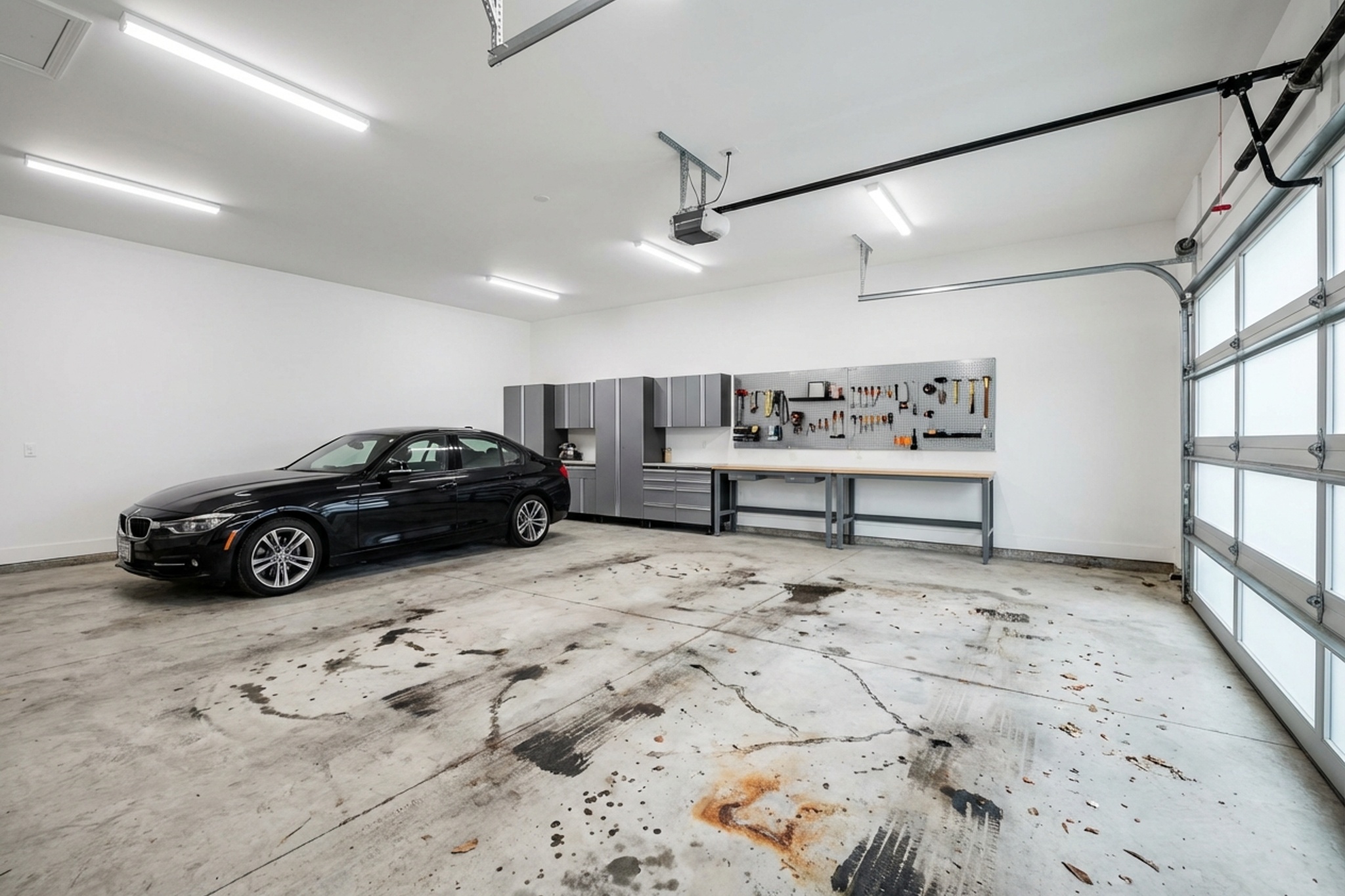
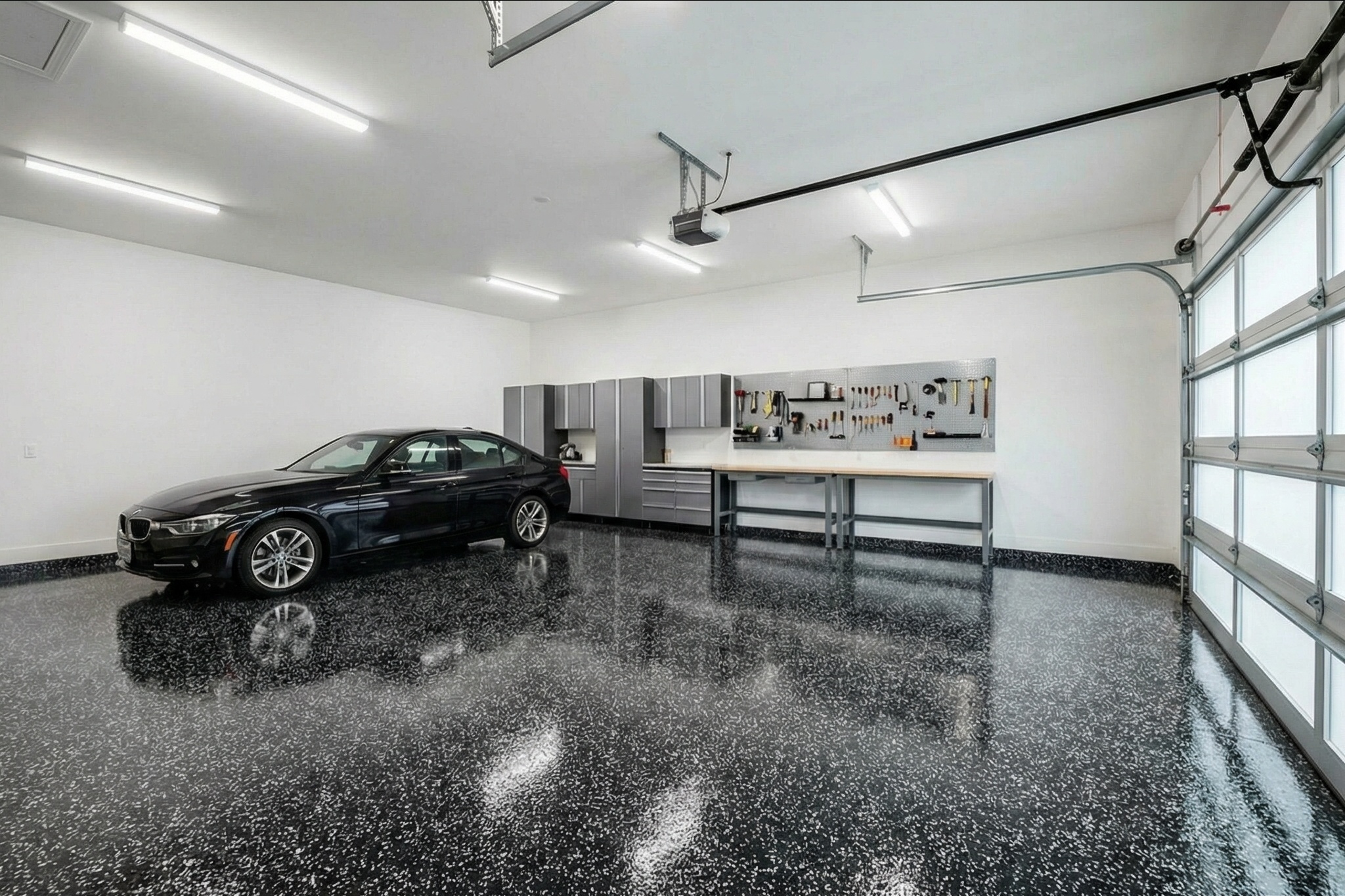
Share the preview after the estimate so the homeowner can revisit the finish and discuss it with anyone else involved in the decision. Keep the selected product and quoted scope clear in your follow-up.
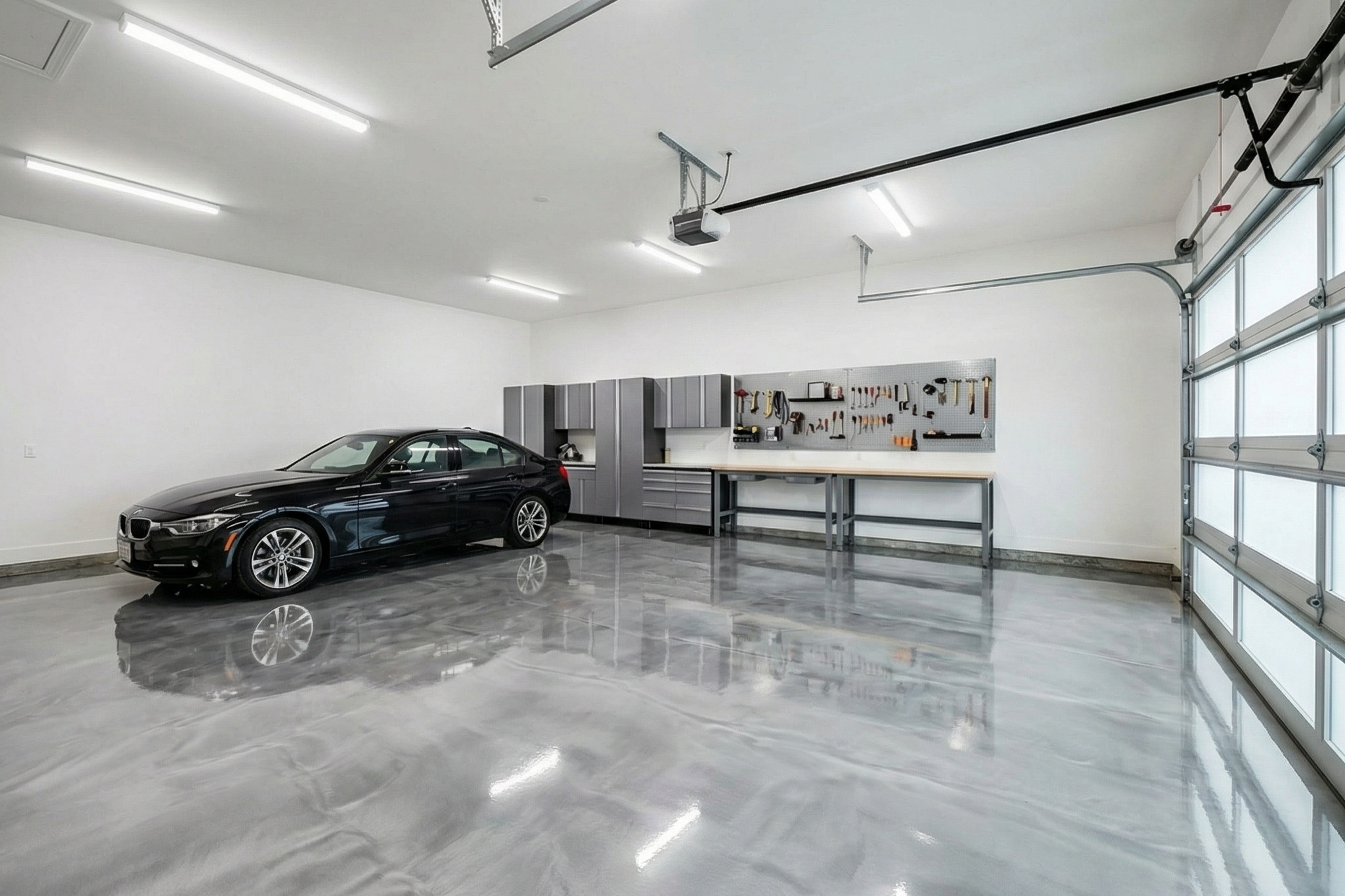
The move that top closers use: generate the flake render first (the option you quoted), then without being asked, generate the metallic render on the same photo. Place them side by side. Do not pitch the upgrade. Just say "here is what the metallic would look like" and wait. When the homeowner asks what the price difference is, you are no longer selling. You are answering a buying question.
Pro Tip
Ask which options the homeowner wants to keep, then share those previews with the estimate. Agree on a time to follow up and answer questions about the finish or scope.
Handling Objections
Every coating contractor hears the same four objections. They are predictable, which means your responses should be rehearsed and ready. Winging it during the close is how you lose jobs you should have won.
"Your price is too high"
This almost never means your price is actually too high. It means the homeowner does not yet understand the value gap between a professional install and the alternatives. Break down your estimate into visible components: diamond grinding, moisture testing, commercial-grade epoxy, polyaspartic topcoat, and a multi-year warranty. When the client can see what each dollar buys, the total feels justified.
If they are comparing you to a cheaper quote, ask what system the competitor specified. Nine times out of ten, the cheap quote is using acid etch prep, a water-based epoxy, and no polyaspartic topcoat. That is not the same job. Point to the prep difference and the topcoat difference specifically. These are the two things that determine whether the coating lasts 2 years or 15.
"I can do it myself for $200"
Do not argue. Agree that kits exist and that some homeowners get decent results. Then ask if they own a diamond grinder. Ask if they know their slab moisture level. Ask if they have applied a polyaspartic topcoat before. The questions make the complexity visible without you saying "you cannot do this." Let them talk themselves through the prep requirements. Most will conclude on their own that the DIY route is more work and risk than they want.
Mention that a meaningful share of your work comes from stripping failed DIY coatings. The strip-and-recoat costs more than the professional install would have. That fact alone moves many DIY-leaning homeowners toward hiring you.
"Let me think about it"
This is the most common objection and the one most contractors handle worst. They say "sure, take your time" and walk away. The job is dead. Instead, ask one follow-up question: "Of course. What part are you unsure about?" This reopens the conversation and tells you whether the real blocker is price, timing, spousal approval, or something else. Address the real concern, not the surface-level stall.
If the answer is genuinely "I need to talk to my spouse," offer to leave a printed comparison sheet and the floor visualization renders. Set a specific follow-up date. "I will check in Thursday. Does morning or afternoon work better?" A vague follow-up dies. A scheduled one keeps the deal alive.
"My neighbor got it done cheaper"
Ask how long ago and what system was used. If it was more than two years ago and still looks good, compliment the installer and explain that material and labor costs have moved up since then. If it was recent and cheap, ask if the neighbor had diamond grinding done. In many cases, the cheap job used acid etch prep and a single coat of epoxy with no topcoat. That floor will not look good in 18 months. You are selling a different product, even if the homeowner thinks they are comparing apples to apples.
Warning
Never trash another contractor by name. It makes you look petty and the homeowner defensive. Focus on system differences, not people. "I cannot speak to their work, but I can walk you through exactly what is included in mine" is the cleanest way to keep the conversation productive.
Upselling from Flake to Metallic
The flake-to-metallic upgrade is the single highest-impact upsell in residential coatings. Material cost increases by $2-3/sq ft. Labor increases by about half a day for a standard garage. But the price jump is $4-6/sq ft. That math works out to nearly double the profit on the same job.
The key is not to pitch metallic as an upgrade. Pitch flake as the standard, present the quote, and then show the metallic render. Let the visual do the work. When the homeowner asks "what would that cost?" they have already moved past the flake option in their head.
Flake vs Metallic: The Margin Math (450 sq ft Garage)
| Full-Broadcast Flake | Metallic Epoxy | Difference | |
|---|---|---|---|
| Price to client | $2,700 | $4,500 | +$1,800 |
| Material cost | $600 | $1,100 | +$500 |
| Labor (2-person crew) | $900 (1.5 days) | $1,200 (2 days) | +$300 |
| Your gross profit | $1,200 | $2,200 | +$1,000 |
| Margin % | 44% | 49% | +5 points |
| Profit per hour | $100/hr | $137/hr | +37% |
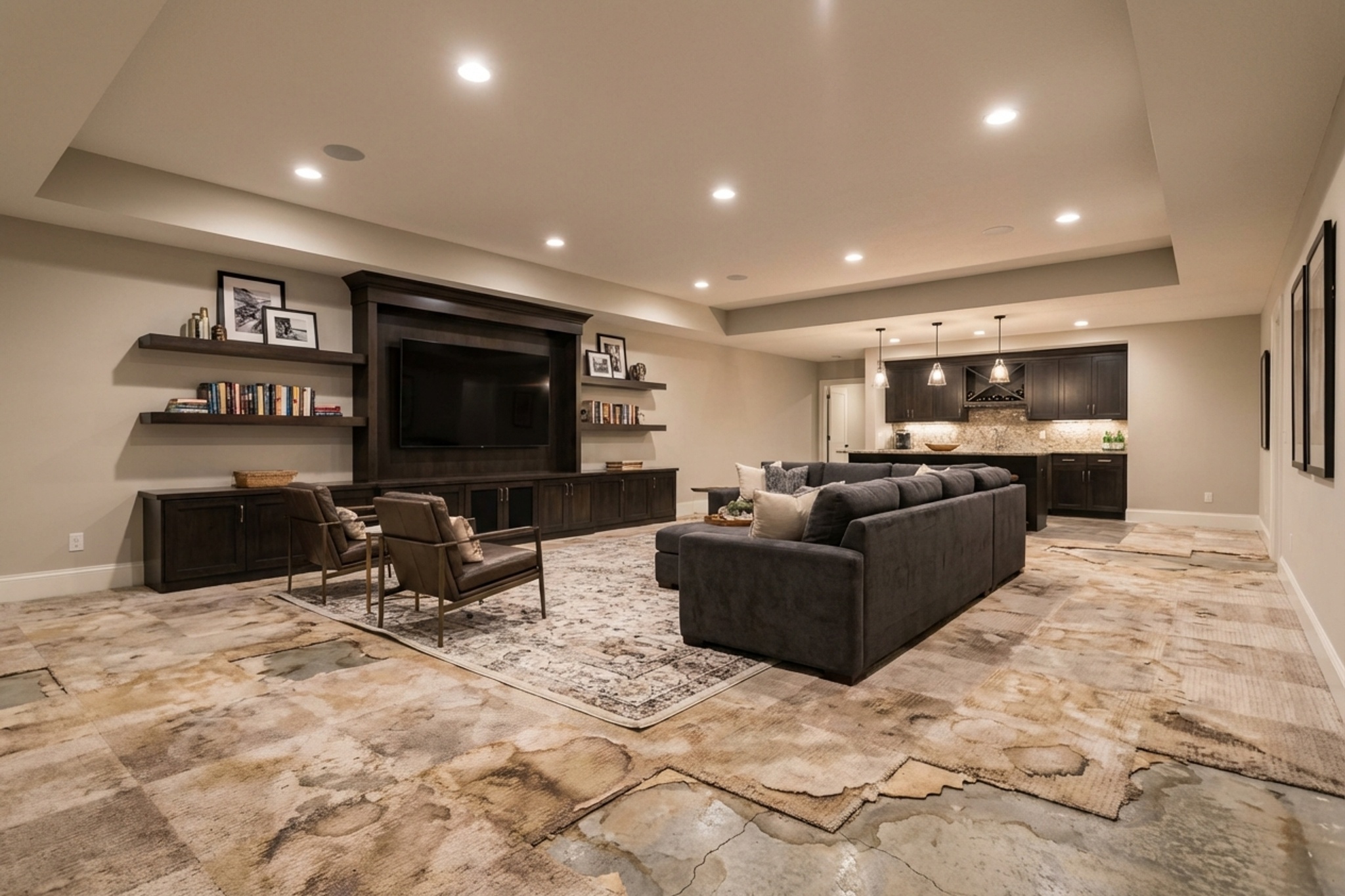
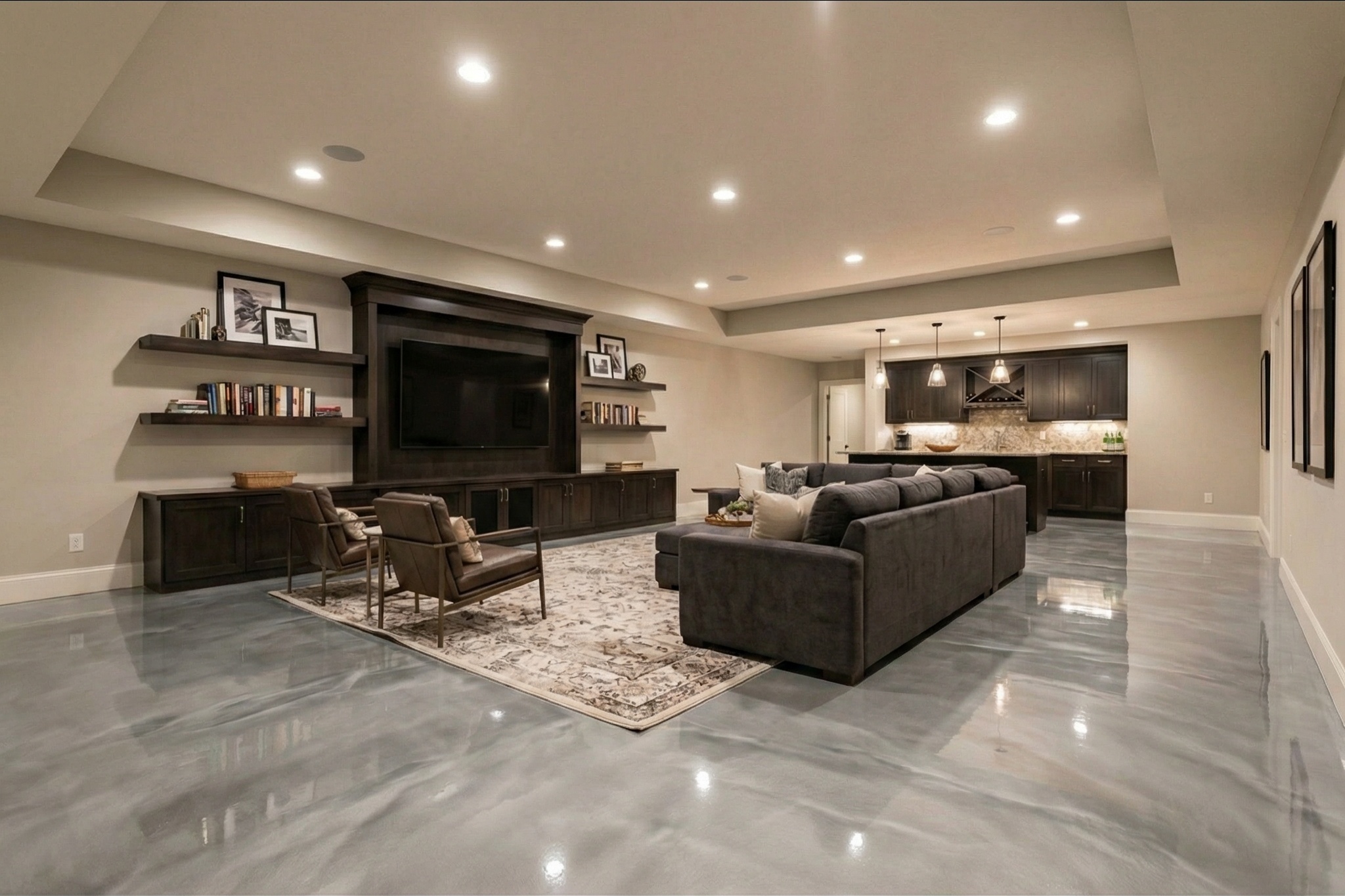
On a 450 sq ft garage, the upgrade adds roughly $1,000 in profit for four extra hours of work. Over 100 jobs per year, that is meaningful additional profit if even a portion of your clients take the metallic option. Contractors who show metallic renders side by side with flake generally see the upgrade rate climb compared to sample-only presentations.
Margin Insight
Offer metallic as an add-on, not a replacement. "Your flake quote stays at $2,700. If you want to go metallic, that moves to $4,500." Framing it as an addition rather than a replacement makes the price difference feel smaller and the decision feel like a bonus choice, not a commitment to a whole new tier.
Follow-Up and Referral Systems
The biggest revenue leak in coating businesses is not lost estimates. It is lost follow-through. You close a job, do quality work, collect payment, and move on to the next one. The homeowner loves the floor. But you never ask for a referral, never request a review, and never check in again. Six months later, their neighbor asks who did their garage and the homeowner says "some company, I forgot the name." That is revenue walking away.
The 3-Touch Follow-Up
- 1Day 3 after completion: Text the homeowner asking how the floor is holding up. Include a direct link to leave a Google review. This is the moment satisfaction is highest and the floor is still a novelty they want to talk about.
- 2Day 30 after completion: Send a follow-up email with care instructions (cleaning tips, what to avoid) and a referral offer. "$100 off their next project for every neighbor you send our way" is simple and effective.
- 3Month 6 after completion: Mail a physical postcard with a photo of their completed floor and a line like "How is your floor holding up? We are booking spring projects." Physical mail stands out when everything else is digital.
The Referral Engine
Established coating contractors typically generate the majority of their revenue from referrals and repeat business. Getting there takes a system, not luck. The simplest referral program: offer a $100-150 credit toward future work for every referral that books. The cost is marginal compared to what you spend on paid leads, and referred leads close at meaningfully higher rates than cold ad traffic.
- Ask every satisfied customer for a Google review within the first week
- Leave 3-5 business cards with each completed job for the homeowner to hand out
- Offer a referral credit, not a cash payout (keeps them in your ecosystem)
- Create a "Neighbor Discount" flyer the homeowner can give to adjacent homes
- Follow up on every referral within 24 hours. Speed signals professionalism
- Track referral sources so you know which clients generate the most leads
Pro Tip
The best time to ask for a referral is during the final walkthrough, not after. While the homeowner is admiring the floor and feeling the excitement of the transformation, say: "If any neighbors ask about the floor, I would appreciate you passing along my card. I set aside some neighbor discount cards for you." This feels natural because you are offering them something to give, not asking for something in return.
Building Your Portfolio and Online Presence
Epoxy flooring is a visual product. Your online presence needs to be visual too. A text-heavy website with stock photos does not convert coating leads. What converts: real before/after photos of your work, a Google Business Profile with 50+ reviews, and an active social media page where homeowners can see recent projects.
Photo Documentation
Photograph every job. Every single one. Before prep, after grinding, during application, and the finished result. Shoot in natural light when possible and always from the same corner of the room so the before/after comparison is clean. Use your phone but keep the lens clean and the frame level. Bad photos of good work hurt more than no photos at all.
- Before: Capture stains, cracks, and the overall rough state of the concrete
- During: Show the grinder marks, the primer coat, and the broadcast process. This educates potential clients on what proper prep looks like
- After: Take the final shot from the same angle as the before photo. Wait until the floor is fully cured and clean before shooting
- Detail shots: Close-ups of flake distribution, metallic swirl patterns, and edge work. These show craftsmanship and look great on Instagram
Google Business Profile
Your Google Business Profile is the first thing most homeowners see when they search "epoxy flooring near me." Optimize it by adding photos weekly, responding to every review (positive and negative), and posting updates about current projects. Contractors with 50+ reviews and a 4.7+ rating get 3-5x the inbound calls of competitors with fewer than 20 reviews. Review volume matters more than a perfect 5.0 rating.
Social Media That Works
Facebook and Instagram drive residential coating leads. TikTok and YouTube drive brand awareness. Focus on the platforms where your buyers actually live. For most residential coating contractors, that means a Facebook business page and an Instagram account posting 2-3 times per week.
- Before/after reels get the highest engagement. Film a 15-second sweep of the bare concrete, cut to the same sweep of the finished floor
- Metallic floor pour videos are inherently shareable. The swirling pigment is hypnotic on video and performs well even with zero followers
- Post the city name and neighborhood in every caption. Local SEO applies to social media, not just Google
- Respond to every comment and DM. Social media leads convert when you reply fast
Do not bother with LinkedIn for residential leads. It is effective for commercial and industrial coating work, but homeowners are not browsing LinkedIn to find a garage floor installer. Put your time where your customers actually look.
Good to Know
Your portfolio is your single best sales tool. Every job you complete without documenting it is a missed opportunity. Set a rule: no final payment is processed until the before/after photos are taken. Build this into your workflow so it happens automatically, not when you remember.
Featured Materials
Flake Broadcast
Domino Flake
The #1 residential seller. Gray and black chips on charcoal base. Safe, proven, and easy to close.
Metallic Epoxy
Silver Metallic
A go-to premium upgrade. Show the render alongside the flake option and let the homeowner react.
Metallic Epoxy
Copper Penny Metallic
Warm copper tones with flowing patterns. Top performer in garages connected to living space.
Flake Broadcast
Granite Flake
Conservative multi-tone gray. Popular with clients who want clean, not flashy.
Close More Jobs with Visual Estimates
Snap a photo of the client's floor, pick a coating, and generate a photorealistic visualization, then show them the result before you leave the driveway.