How Much Does Metallic Epoxy Flooring Cost in 2026?
Real installed prices, material breakdowns by component, labor analysis, and margin strategies for the highest-profit floor system you can offer.
What Metallic Epoxy Actually Costs
$8–15/sq ft
Installed Cost Range
Professional application, all-in
$3–5/sq ft
Material Cost Only
Primer + resin + pigment + topcoat
$3,600–$7,500
Typical 2-Car Garage
400-500 sq ft, standard design
Metallic epoxy is the premium tier of floor coatings, and the pricing reflects the skill and materials involved. For a professional installation that includes diamond grinding, moisture testing, primer, metallic base coat, pigment manipulation, and a clear topcoat, you are looking at $8 to $15 per square foot. That range depends on the complexity of the design, the number of pigment colors, your regional labor market, and whether the concrete needs repair work before coating.
For context, standard flake broadcast runs $4 to $7 per square foot installed. Metallic costs roughly double. But the margin story is the reason contractors gravitate toward metallic work. Material cost only runs about $1 to $2 more per square foot than flake, yet you can charge $4 to $8 more per square foot. That gap is where your profit lives.
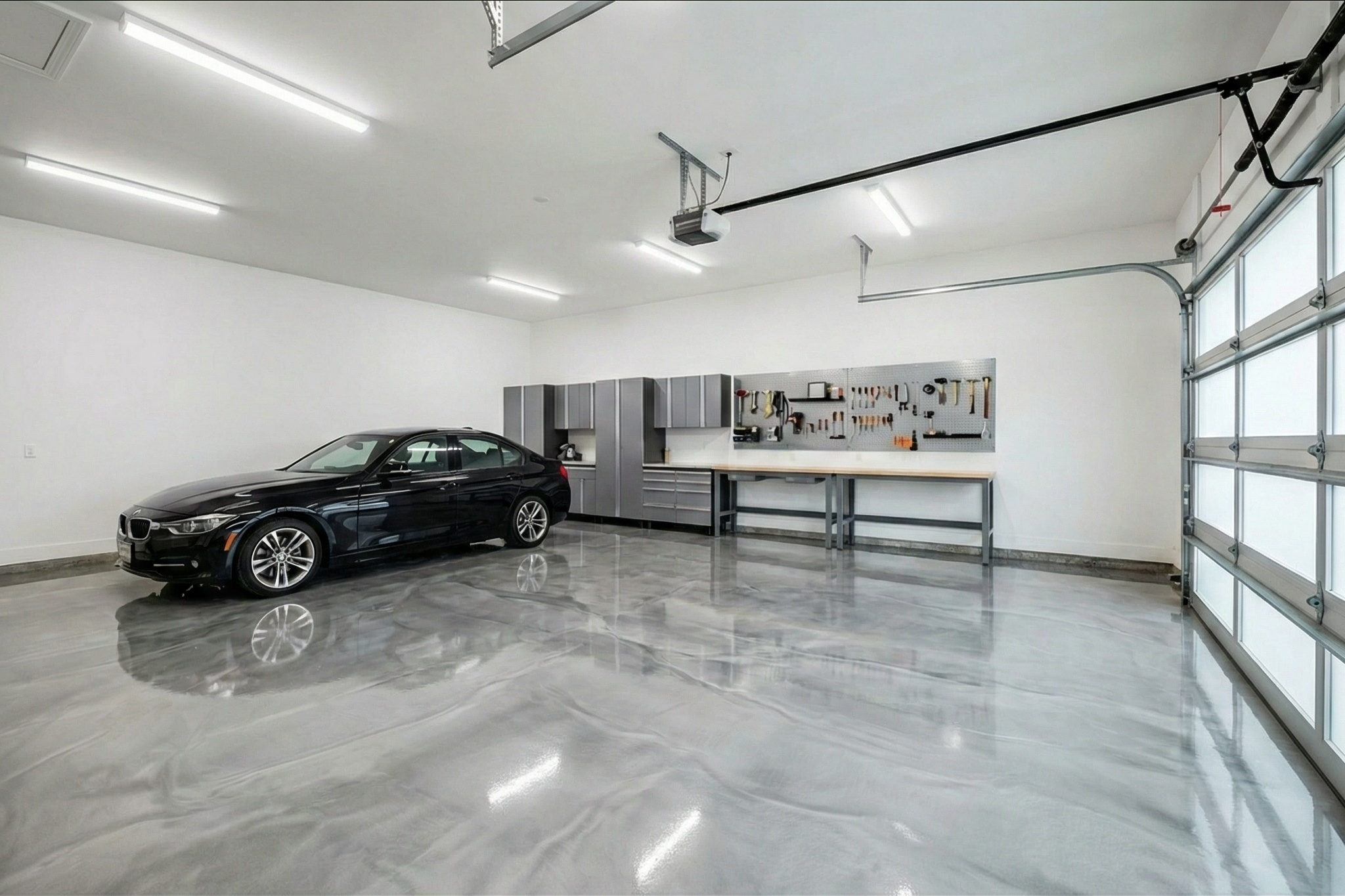
A few real numbers to anchor the discussion. A 450 sq ft two-car garage with a single-color metallic (silver, pearl white) in a mid-cost market runs $3,600 to $5,400 installed. A 1,000 sq ft basement with a multi-color metallic design pushes $8,000 to $12,000. A 2,500 sq ft commercial showroom at $10 to $15 per square foot hits $25,000 to $37,500. These are 2026 numbers from active contractors, not wish-list pricing.
Margin Insight
The installed price varies by as much as 30% between regions. Contractors in the Northeast and West Coast charge $10 to $15 per square foot as baseline. In the Southeast and Midwest, $8 to $11 is more common for the same quality of work. Know your market before setting your rate card.
Material Cost Breakdown: What You Are Actually Buying
A metallic epoxy system has four layers, and each one has a different cost profile. Understanding these line items matters whether you are pricing a job or evaluating a quote as a homeowner. Here is what goes into a 450 sq ft garage at professional-grade product quality.
Primer ($0.50–1.00/sq ft)
The primer bonds to the concrete and gives the metallic coat something to grip. Standard epoxy primers run $60 to $90 per 1.5-gallon kit covering about 150 to 200 sq ft. For slabs with moisture issues, a moisture-mitigating primer bumps the cost to $90 to $140 per kit. A 450 sq ft garage needs 2 to 3 kits. Total primer cost: $120 to $280.
Clear Epoxy Carrier Resin ($1.00–2.00/sq ft)
The metallic effect comes from pigment suspended in a clear or lightly tinted 100% solids epoxy. This is the body of the system. Coverage runs about 150 to 200 sq ft per 1.5-gallon kit at the recommended mil thickness (12 to 16 mils wet). Each kit costs $80 to $120. A 450 sq ft garage needs 3 to 4 kits depending on the design. Some multi-layer metallic designs require two coats of pigmented resin, which doubles this line item. Total carrier cost: $240 to $480.
Metallic Pigment Powders ($0.75–1.50/sq ft)
This is the ingredient that makes metallic floors metallic. Pigment powders contain mica flakes coated with metallic oxides. They refract light as the epoxy cures, creating depth and movement. Pricing runs $15 to $30 per pound depending on color. Standard silver is the cheapest. Chameleon pigments that shift between two or three colors are the most expensive. Coverage depends on how intense you want the effect: 1 to 2 oz per 100 sq ft for a subtle shimmer, 4 to 6 oz per 100 sq ft for full metallic intensity. A 450 sq ft garage at full intensity needs 18 to 27 oz of pigment. Total pigment cost: $170 to $510.
Topcoat ($1.00–2.00/sq ft)
The topcoat protects the metallic layer from UV damage, chemicals, abrasion, and hot tire pickup. Polyaspartic is the recommended topcoat for any space with UV exposure, which includes every garage. A 1.5-gallon kit covers about 150 to 200 sq ft and costs $100 to $150. Polyurethane is a less expensive alternative at $75 to $110 per kit but takes longer to cure and offers slightly less abrasion resistance. Never use an epoxy clear coat as the topcoat on a garage. It yellows within one summer of UV through the garage door. Total topcoat cost: $200 to $450.
Material Cost Summary for 450 sq ft Garage
| Component | Cost Per Sq Ft | Total (450 sq ft) | Notes |
|---|---|---|---|
| Primer | $0.50–1.00 | $225–$450 | Moisture-mitigating adds $0.30/sq ft |
| Clear epoxy carrier | $1.00–2.00 | $450–$900 | Double for two-coat metallic designs |
| Metallic pigments | $0.75–1.50 | $340–$675 | Chameleon colors cost 2x standard |
| Topcoat (polyaspartic) | $1.00–2.00 | $450–$900 | UV stable, recommended for garages |
| Total materials | $3.25–6.50 | $1,465–$2,925 | Higher end for premium multi-color |
Pro Tip
Buy metallic kits from suppliers like Spartan Epoxies, EpoxyPro, or ArmorGarage rather than piecing components together. A 400 to 480 sq ft kit from Spartan runs about $990 and includes primer, carrier resin, pigments, and topcoat. That is roughly $2.20 per square foot for materials, well below purchasing each component separately. Bulk kit pricing is one of the easiest ways to improve your margins.
Labor Cost Breakdown: Time, Crew, and Skill Premium
Labor accounts for 50% to 65% of the total installed cost on metallic epoxy jobs. That is a higher labor ratio than flake or solid color because metallic demands more technique, more time per square foot, and zero tolerance for mistakes during application.
Surface Preparation: $1.50–3.00/sq ft
Metallic epoxy needs a cleaner, smoother base than flake systems because there are no chips to hide imperfections. Diamond grinding to CSP 2-3 is the minimum. Any previous coatings, sealers, or paint must be removed completely. Crack repair and joint filling add time. For a 450 sq ft garage, plan 3 to 5 hours of grinding with a walk-behind planetary grinder plus edge work. A 2-person crew handles this in half a day. Heavily damaged slabs or slabs with multiple old coatings push prep time to a full day.
Metallic Application: $2.50–4.50/sq ft
This is where the skill premium hits. Applying metallic epoxy is not rolling out a coat and walking away. The installer pours the pigmented resin in sections, then manipulates the pigment flow using a combination of rollers, squeegees, solvent mist, and sometimes a heat gun or leaf blower. The direction of your strokes, the amount of solvent, the temperature of the slab, even the airflow in the room all affect the final pattern. Every floor comes out different.
A skilled 2-person crew can complete a 450 sq ft metallic application in 4 to 6 hours. Compare that to flake broadcast on the same space: 1 to 2 hours. That 2 to 3x time difference is the core reason metallic costs more to install. An inexperienced crew will take longer and produce worse results, so this is not a system you learn on paying jobs.
Total Labor Timeline
Day 1: Prep and prime
Diamond grind, crack repair, cleanup, moisture test, apply primer. 6-8 hours for a 2-person crew on a standard garage.
Day 2: Metallic coat
Mix and pour metallic resin, manipulate pigment flow, allow initial cure. 4-6 hours of active work, then leave overnight.
Day 3: Topcoat and finish
Light sanding of any high spots, apply polyaspartic topcoat. 2-3 hours of work. Floor is walkable in 4-6 hours, drivable in 24-48 hours.
Total labor hours for a standard garage: 12 to 17 hours across 2 to 3 days. At a crew cost of $50 to $75 per hour (2 people), that puts labor at $600 to $1,275 for the crew. Add your overhead and margin, and the labor line on the invoice comes out to $1,800 to $3,150 for a 450 sq ft garage.
Warning
Metallic epoxy has a short open time, typically 15 to 25 minutes depending on temperature. Once you start pouring, you cannot stop to fix mistakes. If you are new to metallic, practice on plywood sheets or small utility rooms before quoting a $5,000 garage. A botched metallic floor costs $2,000 to $4,000 to strip and redo.
Metallic Epoxy Cost by Space Type
The per-square-foot cost of metallic epoxy drops as the project size increases. More square footage means better material utilization, less edge work per unit area, and the fixed costs of mobilization and prep spread across a bigger surface. Here is how pricing shakes out across the most common project types.
Metallic Epoxy Installed Cost by Space Type (2026)
| Space Type | Typical Size | Cost/sq ft | Total Range | Notes |
|---|---|---|---|---|
| 1-car garage | 200–250 sq ft | $10–15 | $2,000–$3,750 | Small area = higher per-sq-ft rate |
| 2-car garage | 400–500 sq ft | $8–12 | $3,200–$6,000 | The bread-and-butter metallic job |
| 3-car garage | 600–750 sq ft | $8–11 | $4,800–$8,250 | Scale starts reducing per-unit cost |
| Basement | 800–1,200 sq ft | $8–12 | $6,400–$14,400 | Moisture mitigation may add $1–2/sq ft |
| Living area / interior | 300–700 sq ft | $10–15 | $3,000–$10,500 | Higher finish expectations, more detail work |
| Commercial showroom | 1,500–3,000 sq ft | $9–14 | $13,500–$42,000 | Logos, borders, and multi-zone designs |
| Commercial (5,000+ sq ft) | 5,000+ sq ft | $7–11 | $35,000–$55,000+ | Volume pricing, simpler designs typical |
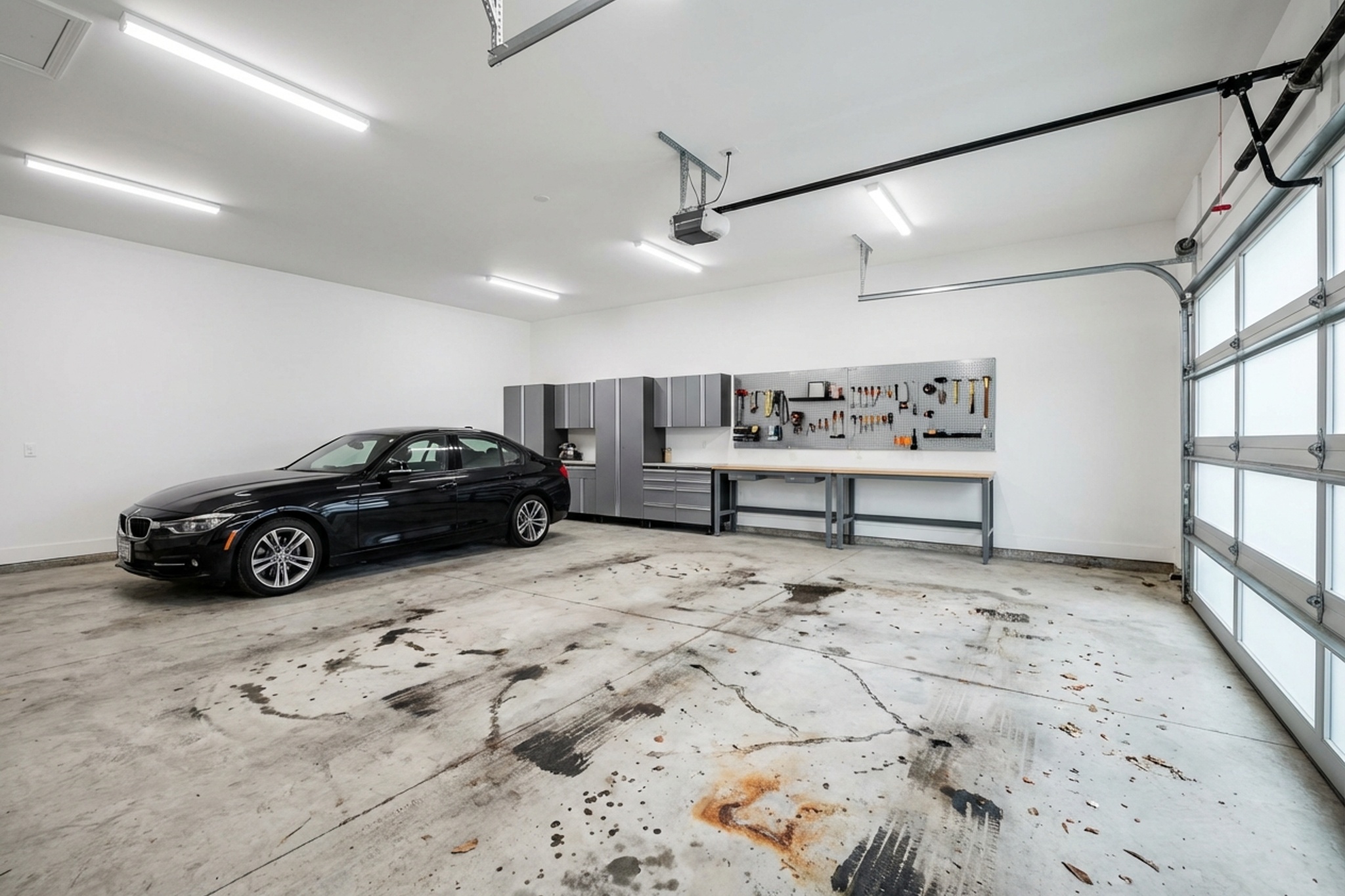
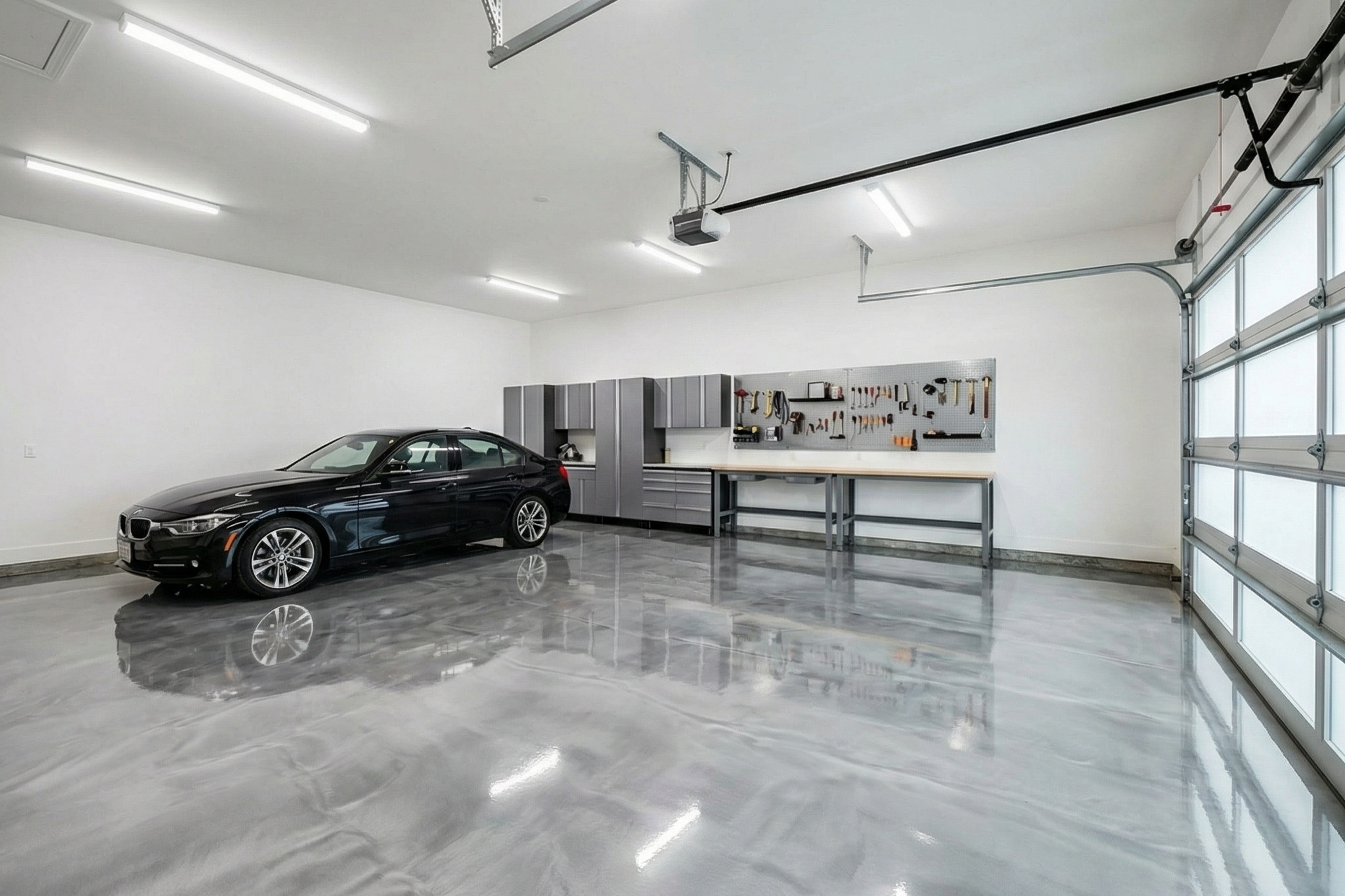
Why Small Spaces Cost More Per Square Foot
A 200 sq ft one-car garage does not cost half as much as a 400 sq ft two-car garage. The fixed costs are nearly identical: equipment transport, diamond grinder setup, mixing supplies, edge work, and the crew's minimum day rate. On a small project those fixed costs get divided by fewer square feet, pushing the per-unit price up. Most contractors have a minimum project charge of $2,000 to $2,500 for metallic work regardless of the area.
Basements: The Moisture Variable
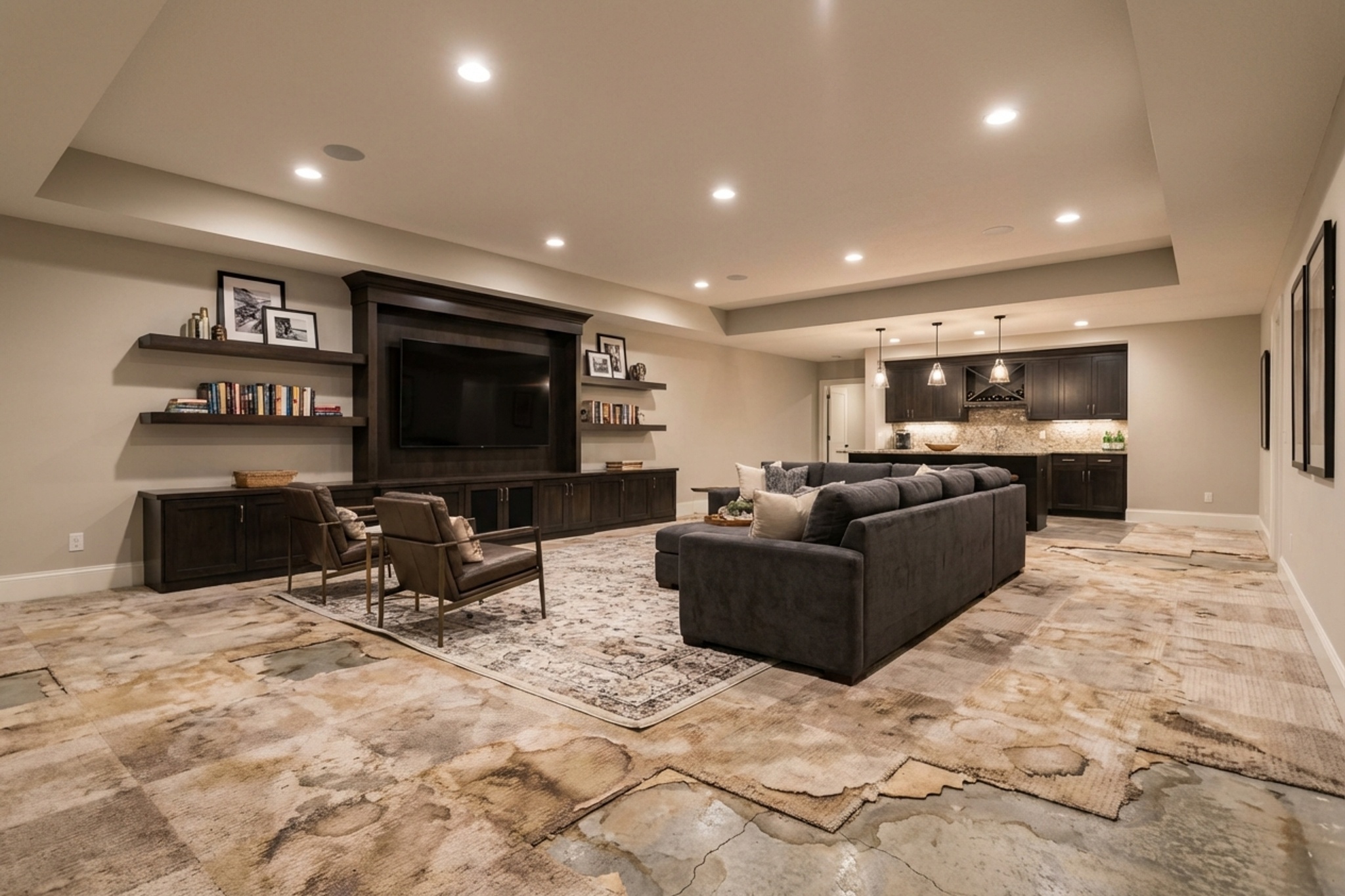
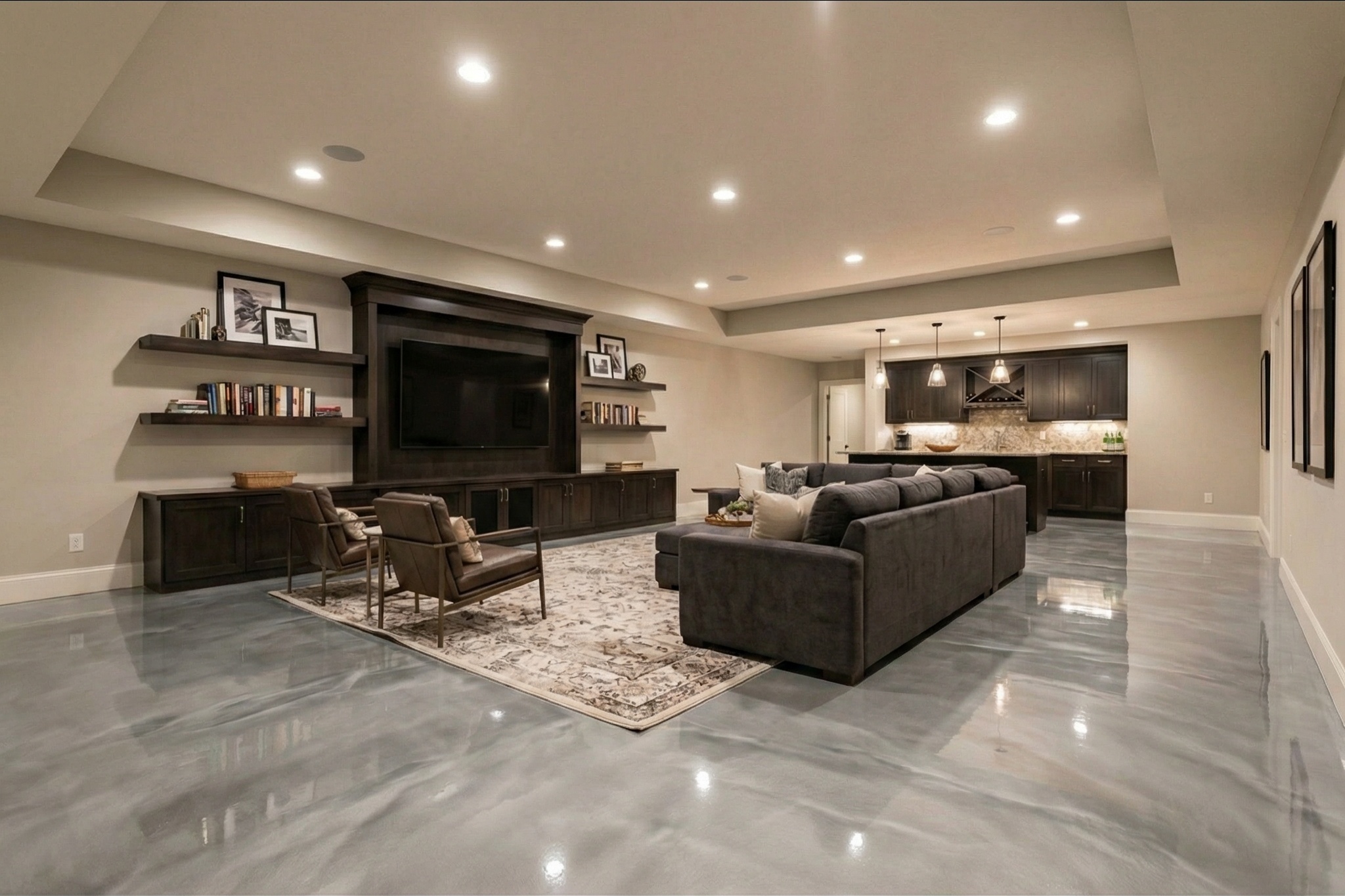
Basement slabs are the most likely to have moisture issues. A slab sitting on grade without a vapor barrier can transmit enough moisture to cause delamination within months. Moisture testing ($50 to $100 per test using calcium chloride or relative humidity probes) is not optional for basements. If moisture levels exceed the epoxy manufacturer's threshold, you need a moisture-mitigating primer, which adds $1 to $2 per square foot to the material cost and extends the project timeline by a day.
What Makes Metallic More Expensive Than Standard Epoxy
Metallic epoxy costs roughly double what a flake broadcast system costs. That premium comes from four sources, and understanding them helps you justify the price to clients (or evaluate whether a quote you received is fair).
1. The Skill Factor
Flake broadcast is a learnable system. Roll the base, throw chips, scrape, topcoat. A competent helper can do it after a few jobs. Metallic is an art form disguised as a trade skill. The installer shapes the final look during application by controlling how pigment flows through wet resin. Solvent mist direction, roller pressure, pour speed, temperature management. These are judgment calls that take dozens of floors to develop, and a bad one shows immediately. That expertise commands higher labor rates.
2. Premium Materials
Metallic pigment powder costs $15 to $30 per pound. Vinyl flake chips cost $3 to $8 per pound. The clear 100% solids carrier resin used in metallic systems is more expensive than the pigmented body coats used in flake work. The material cost delta is real, but it is smaller than most people think: about $1 to $2 per square foot more for materials. The price premium to clients is $4 to $8 per square foot more. That gap is margin.
3. Application Time
A 450 sq ft flake broadcast takes a 2-person crew about 1 to 2 hours for the application step. The same area in metallic takes 4 to 6 hours. The prep and topcoat steps are roughly equal between the two systems, but the middle step, where the floor gets its character, takes 2 to 3 times longer with metallic. On a tight schedule, that means one metallic garage per day versus two flake garages.
4. The Waste Factor
Metallic systems have higher material waste than flake. You mix more resin than you need because running short mid-pour is catastrophic. The industry recommendation is a 15% material overage for metallic versus 5 to 10% for flake. Leftover mixed metallic resin is not reusable since it cures in the bucket. Pigment powders have a shelf life and lose their luster if stored improperly between jobs. These waste factors need to be built into your pricing.
Metallic vs Flake Epoxy: Cost Factor Comparison
| Factor | Flake Broadcast | Metallic Epoxy | Difference |
|---|---|---|---|
| Material cost/sq ft | $1.50–3.00 | $3.00–5.00 | +$1.50–2.00/sq ft |
| Application time (450 sq ft) | 1–2 hours | 4–6 hours | 2–3x longer |
| Skill level required | Moderate | High | Significant learning curve |
| Material waste factor | 5–10% | 10–15% | Higher overage needed |
| Installed price/sq ft | $4–7 | $8–15 | +$4–8/sq ft |
| Gross margin (typical) | 30–45% | 40–60% | Higher margin per job |
Good to Know
When a client asks why metallic costs more, keep it simple: "The pigments are more expensive, the application takes twice as long, and every floor comes out unique because the installer is shaping the pattern by hand. You are paying for a one-of-a-kind floor, not a production-line coating." Most homeowners get it when you frame it that way.
Is Metallic Epoxy Worth the Cost?
Whether metallic is "worth it" depends on who is asking and what they value. The answer is different for homeowners and contractors.
For Homeowners: The ROI Case
Epoxy garage floors increase home resale value by an estimated 1% to 3%, and premium finishes like metallic push that toward the higher end. On a $400,000 home, that is $4,000 to $12,000 in perceived value from a $4,000 to $6,000 investment. Real estate agents consistently report that finished garages with high-end coatings photograph better, generate more showing interest, and help homes sell faster. For car enthusiasts, the showroom appeal of metallic is a lifestyle purchase, not just a financial calculation.
The durability argument also works in metallic's favor. A properly installed metallic floor lasts 15 to 20 years with minimal maintenance. That is $200 to $400 per year for a floor that transforms the space, protects the concrete, and resists chemicals, hot tires, and stains. Compare that to garage floor paint at $100 to $200 upfront that needs reapplication every 1 to 3 years.
Metallic Epoxy for Homeowners
Pros
- One-of-a-kind appearance that cannot be replicated
- 15 to 20 year lifespan with proper topcoat
- Increases home resale value 1–3%
- Resists chemicals, hot tires, stains, and impact
- Low maintenance: sweep and mop
- Photographs well for resale listings
Cons
- 2x the cost of flake broadcast
- Requires professional installation (DIY failure rate is very high)
- Pattern cannot be previewed exactly, only approximated
- Repairs are harder to blend than with solid color or flake systems
For Contractors: The Margin Case
Metallic is the most profitable floor system in your catalog. The numbers make the case. On a $5,000 metallic garage job, material cost is roughly $1,400 to $2,000. Labor and overhead run $1,500 to $2,000. That leaves $1,000 to $2,100 in gross profit, or 20% to 42% margin even at moderate pricing. Experienced metallic contractors who charge $10 to $12 per square foot on a 450 sq ft garage (total $4,500 to $5,400) consistently hit 45% to 60% gross margins.
Compare that to flake broadcast. A $2,800 flake job on the same garage has material cost of $800 to $1,200 and similar labor costs. Gross profit drops to $600 to $1,000. Metallic delivers 50% to 100% more gross profit per job from the same crew in roughly the same number of days.
There is also the referral multiplier. Metallic floors get photographed, shared on social media, and shown to neighbors. One metallic garage generates 2 to 4 referrals on average versus 0 to 1 for a flake floor. The visual impact does your marketing for you.
"I did 40 metallic garages last year. Every single one was a referral from a previous metallic client or from someone who saw a photo. I spend almost nothing on advertising for metallic work."
How Contractors Should Price Metallic Jobs
Pricing metallic work requires a different approach than standard coatings. You are selling a custom art floor, not a commodity service. Your pricing strategy should reflect that.
The Finish Option Framework
The most effective metallic pricing strategy is to show a clear upgrade path during the sales conversation, then send one contractor-reviewed scope in the final proposal. Present finish options with visualizations of the client's actual space: standard flake broadcast at $5 to $7 per square foot, premium flake with polyaspartic topcoat at $7 to $9 per square foot, and metallic with custom pattern at $10 to $14 per square foot. Use the previews to discuss how the finishes differ in their space, then confirm the chosen system and quote its actual scope.
Margin Targets by Job Type
Metallic Epoxy Pricing Targets
| Job Type | Target Price/sq ft | Target Gross Margin | Revenue (450 sq ft) |
|---|---|---|---|
| Single-color metallic (garage) | $8–11 | 40–50% | $3,600–$4,950 |
| Multi-color metallic (garage) | $10–14 | 45–55% | $4,500–$6,300 |
| Basement metallic | $9–13 | 40–55% | $7,200–$15,600 (800-1,200 sf) |
| Commercial metallic | $9–15 | 45–60% | $13,500–$45,000 (1,500-3,000 sf) |
| Metallic accent zone (within flake) | $12–18 | 50–65% | Add-on: $600–$1,800 (50-100 sf) |
Upsell Strategies That Work
- 1Metallic accent zones within a flake floor. Not every client can justify full-metallic pricing. Offer a metallic accent border, entryway, or feature section (50 to 100 sq ft) within a flake floor. You charge a premium rate on the accent zone ($12 to $18/sq ft) and the flake base rate on the rest. The client gets the metallic look at a total cost between full-flake and full-metallic.
- 2Before/after visualizations at the initial consultation. Upload the client's floor photo and show them a metallic rendering during the sales visit. Use the preview to discuss the finish in the context of the room.
- 3Multi-color upgrades. Quote single-color metallic as the base metallic price and offer a multi-color blend (lava flow, ocean wave, galaxy) as a $1 to $3 per square foot upgrade. The material cost of additional pigments is $50 to $150 for a garage. The perceived value increase is $500 to $1,500.
Margin Insight
Never present metallic as the only option. Always show it alongside flake as the premium upgrade. The contrast makes metallic look like a reasonable step up rather than an expensive outlier. Contractors who use clear finish-option framing routinely report larger average ticket sizes compared to single-option quoting.
Saving Money Without Cutting Corners
Whether you are a homeowner shopping for quotes or a contractor looking to protect margins, there are places to save on metallic epoxy and places where cutting costs will come back to hurt you.
Where You Can Economize
- Choose single-color metallic over multi-color. Silver, pearl, and charcoal metallic floors look fantastic and cost 15% to 25% less than multi-pigment designs. The application is also faster, which reduces labor.
- Buy complete kits instead of individual components. A 400 to 480 sq ft kit from Spartan Epoxies runs about $990. Buying the same components separately costs $1,200 to $1,400. That is a 20% to 30% savings on materials.
- Time your project for the contractor's slow season. In most markets, November through February is slower for residential flooring. Some contractors offer 10% to 15% discounts to keep their crews busy through winter.
- Bundle with other work. If you are already getting a garage organized, drywall finished, or concrete repaired, bundling the metallic floor with other trades often reduces mobilization costs.
- Get multiple quotes but compare systems, not just prices. Three quotes at $8, $10, and $14 per square foot might represent three completely different systems. Ask each contractor to itemize: primer type, resin brand, pigment brand, topcoat type, and number of coats.
Where You Should Never Cut Costs
- Surface preparation. Skipping diamond grinding and using acid etch instead saves $1 to $2 per square foot and virtually guarantees delamination within 12 to 18 months. Every experienced contractor has a horror story about being called to fix someone else's no-prep metallic floor.
- Topcoat quality. A cheap epoxy clear coat instead of polyaspartic saves $0.50 to $1.00 per square foot and starts yellowing within the first summer. For a garage that gets any sunlight, polyaspartic or polyurethane topcoat is not optional.
- Material quantity. Running short mid-pour on metallic is a disaster. You cannot add more resin to a partially cured section without creating visible seam lines. The 15% overage recommendation exists for a reason. Budget for it.
- Installer experience. A cheap quote from someone who has done "a few" metallic floors is not a bargain. It is a gamble. Ask to see at least 10 completed metallic projects and check that they are using professional-grade products, not big-box kits.
DIY Metallic Epoxy: The Honest Assessment
DIY metallic kits exist in the $800 to $1,400 range for a two-car garage. That is 50% to 70% less than professional installation. But metallic epoxy has the highest DIY failure rate of any floor coating system. The technique required to manipulate pigments within a 15 to 25 minute open time is not something you learn from a YouTube video on your first attempt.
Failed DIY metallic floors end up with pigment pooling, visible pour lines, uneven coverage, and flat spots where the metallic effect did not develop. Stripping a failed metallic floor and redoing it professionally costs $2,000 to $4,000, which means the total spend ends up higher than professional installation would have been from the start. DIY metallic is only reasonable if you have genuine epoxy application experience and are willing to practice on scrap surfaces first.
Warning
If a quote comes in under $6 per square foot for metallic epoxy with professional installation, ask questions. At that price, the contractor is either using thin, low-quality materials, skipping proper prep, or undervaluing their own labor. A metallic floor installed too cheaply looks worse than a quality flake floor and will fail sooner.
Featured Materials
Classic Metallic
Silver Storm
Clean silver tones. The number one seller for residential garages and basements.
Premium Effect
Copper Lava
Warm copper with directional flow. High margin, high visual impact.
Elegant Finish
Pearl Marble
White pearl with subtle veining. Popular for showrooms and interior spaces.
Statement Floor
Midnight Galaxy
Deep black with metallic highlights. Commands top-tier pricing.
Multi-Color Blend
Ocean Wave
Blue-green metallic with flowing movement. The most-photographed metallic pattern.
Modern Neutral
Charcoal Smoke
Dark gray metallic with subtle depth. Professional, understated, easy to sell.
Show the Metallic Difference
Upload a photo of any space and visualize it in metallic epoxy, then show your client why the premium is worth it inside a reviewed proposal.