Concrete Stain Flooring: The Contractor's Complete Guide
Acid stain, water-based stain, and concrete dye — how each one works, what they cost, where they belong, and when epoxy is the better call.
What Is Concrete Stain and How Does It Work?
$2–15/sq ft
Installed Cost Range
Basic to high-end decorative
3 Types
Acid, Water-Based, Dye
Each works differently
20+ yrs
Longevity (Acid Stain)
Permanent chemical bond
Concrete stain is not paint. That distinction matters more than anything else in this guide, because confusing the two is where most homeowner disappointment starts. Paint sits on top of concrete and eventually peels. Stain penetrates into the concrete and becomes part of the surface.
There are three products that get called "concrete stain" in the field: acid-based reactive stains, water-based stains, and acetone or water-based dyes. They produce completely different results through completely different chemistry. Acid stain reacts with the calcium hydroxide in cured concrete to produce permanent, translucent color that looks mottled and organic. Water-based stain deposits pigment particles into the pores of the concrete for more uniform, predictable color. Dye uses ultra-fine pigments dissolved in acetone or water that penetrate fast and dry fast with no chemical reaction at all.
The common thread is that all three are penetrating products. They color the concrete itself rather than building a film on top. That means stained concrete retains the texture and feel of the original slab. You walk on concrete, not on a coating. For some applications that is exactly right. For others it is the wrong approach, and we will cover both.
Good to Know
Stain changes the color of concrete. It does not protect it. Every stained floor needs a sealer on top to prevent wear, moisture absorption, and staining from spills. The sealer is what you are actually maintaining over time, not the stain itself.
Acid Stain: The Original
Acid stain has been around since the 1950s. It is a solution of water, hydrochloric acid (muriatic acid), and metallic salts — typically iron, copper, or cobalt chloride. When the solution contacts cured concrete, the acid opens the pores and the metallic salts react with calcium hydroxide in the cement paste to form insoluble metallic oxide crystals. Those crystals are permanently embedded in the concrete. You cannot sand them out, scrub them off, or strip them with chemicals.
That chemical reaction is what makes acid stain beautiful and frustrating at the same time. The color develops organically based on the mineral content and moisture level of the specific slab. Two slabs poured from the same mix, same truck, same day will stain differently. Variations in troweling, curing, and age create subtle differences in calcium hydroxide distribution that produce the mottled, marbled look acid stain is known for.
The Color Palette Is Limited
Acid stain does not come in 50 colors. The chemistry constrains it. Iron salts produce amber, brown, and tan. Copper salts produce blue-green. Cobalt produces blue. Manganese produces black or dark brown. That is roughly the entire palette. Eight to twelve colors depending on the manufacturer, all in the earth-tone and blue-green family. You will never get a true red, purple, orange, or bright white from acid stain because the reactive chemistry simply does not produce those hues.
- Cola (dark brown-black) — the most popular single color, often used to mimic aged leather
- English Red (warm reddish-brown) — terra cotta tones on most slabs
- Malayan Buff (golden tan) — natural, sandstone look
- Azure Blue (turquoise-green) — copper-based, dramatic on light concrete
- Seagrass (subtle blue-green) — more muted than Azure, popular for contemporary interiors
- Coffee Brown (medium warm brown) — reliable workhorse color
Application Technique
Clean and prep the concrete
Remove all sealers, paints, adhesives, and contaminants. The acid needs direct contact with bare concrete. Any barrier prevents the reaction. Scrub oil stains with TSP. Existing sealers require mechanical removal — chemical strippers leave residue that blocks penetration.
Dampen the surface
Mist the concrete with water until damp but not puddled. Dry concrete absorbs acid stain too fast, producing dark spots. Wet concrete dilutes the reaction, producing washed-out color. Damp is the target.
Apply with a pump sprayer
Use an acid-resistant pump sprayer with a conical nozzle. Spray in overlapping arcs, maintaining a wet edge. Do not stop mid-slab. Two thin coats produce better results than one heavy coat. The first coat triggers the initial reaction. The second coat deepens and evens the color.
Let it react for 4-24 hours
The metallic salts need time to crystallize. Most manufacturers specify a minimum of 4-6 hours. For deeper color, leave it 18-24 hours. Do not walk on the slab during reaction or you will leave footprints in the developing color.
Neutralize and rinse
Scrub the surface with a baking soda and water solution (1 cup per gallon) or ammonia solution to stop the acid reaction. This step also removes the chalky residue left behind. Rinse thoroughly with clean water. Multiple rinses. Residue left on the surface will cause sealer failure.
Let dry, then seal
Allow 24 hours minimum for the slab to dry completely after rinsing. Apply an acrylic sealer for a natural look or an epoxy sealer for more protection. Solvent-based acrylics darken and enrich the color. Water-based acrylics preserve the as-stained color more accurately.
Warning
Acid stain is genuinely hazardous. Hydrochloric acid burns skin on contact and produces fumes that damage lungs. Full PPE is mandatory: chemical-resistant gloves, splash goggles, respirator with acid gas cartridges, rubber boots. Ventilate the workspace. This is not a product where you can shortcut safety gear because the job is small.
The unpredictability of acid stain is its best feature if the client wants a natural, one-of-a-kind floor. It is its worst feature if the client expects exact color matching or uniform coverage. You have to set that expectation before the job starts, ideally with a test patch on the actual slab. Apply a small section, let it react, neutralize it, and show the client the result. If they love the variation, proceed. If they want consistency, steer them to water-based stain instead.
Water-Based Stain: The Modern Option
Water-based concrete stains are acrylic polymer emulsions loaded with pigment. They do not react with the concrete. They penetrate into the pores and deposit color particles that bond to the surface through the polymer carrier. Think of it as coloring the concrete rather than chemically transforming it.
The practical result is predictability. Apply a brown water-based stain on ten different slabs and you get ten floors that look close to the same brown. The underlying concrete still influences the final shade — lighter slabs stain brighter, darker slabs stain deeper — but the variation is subtle compared to acid stain. For contractors, this means fewer surprises and fewer difficult conversations with clients who expected one color and got another.
Why the Color Range Is Wider
Because water-based stains use manufactured iron oxide pigments rather than chemical reactions, the color palette is essentially unlimited. Reds, oranges, yellows, greens, blues, purples, grays, blacks, whites. Any color you can mix from pigment is available. Most manufacturers offer 20-40 standard colors plus custom matching.
That color range opens up decorative possibilities that acid stain cannot touch. Saw-cut patterns with alternating colors, stenciled borders, logo work for commercial floors, gradients that transition from one hue to another. Water-based stain is what you reach for when the design matters as much as the color.
Layering and Blending
Water-based stains are layerable in a way acid stains are not. Apply a base coat, let it dry, then add a second color on top. The layers build depth without the unpredictability of layered acid applications. You can sponge, rag, or feather a second color over a dry base to create faux stone, leather, or aged patina effects with controlled results.
- No neutralization step required — apply, dry, seal
- Low VOC — safe for occupied spaces without full respiratory protection
- Can be applied over previously stained or dyed concrete
- Compatible with most sealers including epoxy and polyurethane
- Available in UV-stable formulations for exterior work
Water-Based Stain vs Acid Stain
Pros
- Predictable, repeatable color results
- Unlimited color palette including bright and pastel tones
- No hazardous chemicals, no neutralization step
- Faster application — seal the next day instead of two days later
- Layerable for complex decorative patterns
- Works on concrete, masonry, and cementitious overlays
Cons
- Does not produce the organic mottling that acid stain is known for
- Color is not as permanent — relies on sealer for longevity
- Can look flat or paint-like if applied too heavily
- Less depth and translucency compared to acid stain
- Requires more frequent resealing (every 1-3 years in high-traffic areas)
Pro Tip
The best decorative concrete installers combine both products. Acid stain the base for organic depth, let it react and neutralize, then layer water-based stain on top for accent colors that acid chemistry cannot produce. The combination gives you the translucency of acid with the color range of water-based.
Concrete Dye: The Fast Option
Concrete dyes are ultra-fine pigment particles dissolved in a carrier — either acetone or water. No acid, no chemical reaction, no waiting for metallic salts to crystallize. The carrier evaporates, the pigment stays behind in the concrete pores. With acetone-based dye, that evaporation happens in minutes. You can seal the same day. On tight-schedule commercial jobs, dye is the only colorant that keeps the timeline intact.
Acetone-Based Dye
Acetone dye is the speed option. It comes as a powder that you dissolve in acetone on site. Spray it on, and the acetone flashes off almost immediately, leaving concentrated pigment embedded in the concrete. You can walk on it in minutes and seal it within an hour. For a 2,000 sq ft retail space that needs to be open for business the next morning, acetone dye is the answer.
The speed comes with real tradeoffs. Acetone is extremely flammable and the fumes are toxic at concentration. You need explosion-proof fans for ventilation, no open flames or sparking tools anywhere near the workspace, and a proper organic vapor respirator. Contractors have been seriously injured and killed working with acetone-based products in poorly ventilated spaces. This is not a product for casual use.
Water-Based Dye
Water-based dyes dissolve in water instead of acetone. Safer application, no explosive vapors, lower odor. The tradeoff is speed — water evaporates slower than acetone, so dry time extends to a few hours instead of minutes. Still faster than acid stain by a wide margin. Water-based dyes are popular for occupied retail and office spaces where fumes are not acceptable.
Where Dye Fits and Where It Fails
- Polished concrete floors — dye is the standard colorant for mechanically polished slabs. Apply dye partway through the polishing sequence (typically at 200-400 grit), then continue polishing. The subsequent grinding steps lock the pigment deeper into the densified surface.
- Retail and commercial interiors — fast turnaround, minimal disruption, clean consistent color.
- Touch-ups and repairs — dye blends edges seamlessly where acid stain would create an obvious line.
- NOT for exterior applications — dye is not UV stable. Direct sunlight fades it within months. Interior only.
- NOT for wet environments — dye has no inherent moisture resistance. Requires a high-quality sealer in any space exposed to water.
Good to Know
Dye on polished concrete is a different animal than dye on sealed concrete. Polished concrete has a densified, glass-like surface that traps the dye particles during grinding. The result is highly durable because the pigment is mechanically embedded, not just sitting in open pores waiting to be worn away.
Cost Breakdown: Stain, Epoxy, and Polished Concrete
$2–4/sq ft
Basic Single-Color Stain
Acid or water-based, one coat + sealer
$4–10/sq ft
Decorative Stain Work
Multiple colors, saw-cuts, scoring
$12–25/sq ft
High-End Decorative
Overlay + stain + scoring + multi-sealer
Staining existing concrete is one of the cheapest ways to get a finished decorative floor. The concrete is already there. You are not pouring a new slab or laying new material over it. A basic single-color acid stain on clean, crack-free concrete runs $2-4/sq ft installed. That includes prep, stain application, neutralization, and a coat of acrylic sealer.
Costs climb when the design gets complex. Scoring or saw-cutting a tile pattern into the slab before staining adds $1-3/sq ft. Multiple stain colors with masking between them adds $2-4/sq ft. If the existing slab is damaged, oil-stained, or previously coated, prep costs increase by $1-3/sq ft for grinding and repair. On a slab that needs a cementitious overlay before staining, total cost jumps to $8-15/sq ft because you are essentially building a new surface.
Decorative Concrete Cost Comparison (2026)
| System | Cost/sq ft (installed) | Durability | Maintenance | Best Application |
|---|---|---|---|---|
| Acid Stain (basic) | $2-4 | 20+ years (color) | Reseal every 2-3 yrs | Patios, basements, retail |
| Acid Stain (decorative) | $5-10 | 20+ years (color) | Reseal every 2-3 yrs | Restaurant floors, showrooms |
| Water-Based Stain | $3-6 | 10-15 years | Reseal every 1-3 yrs | Commercial interiors, multi-color work |
| Concrete Dye | $2-5 | 10-15 years (interior) | Reseal every 1-2 yrs | Polished floors, fast turnarounds |
| Solid Epoxy Coating | $3-5 | 10-15 years | Minimal | Garages, utility spaces |
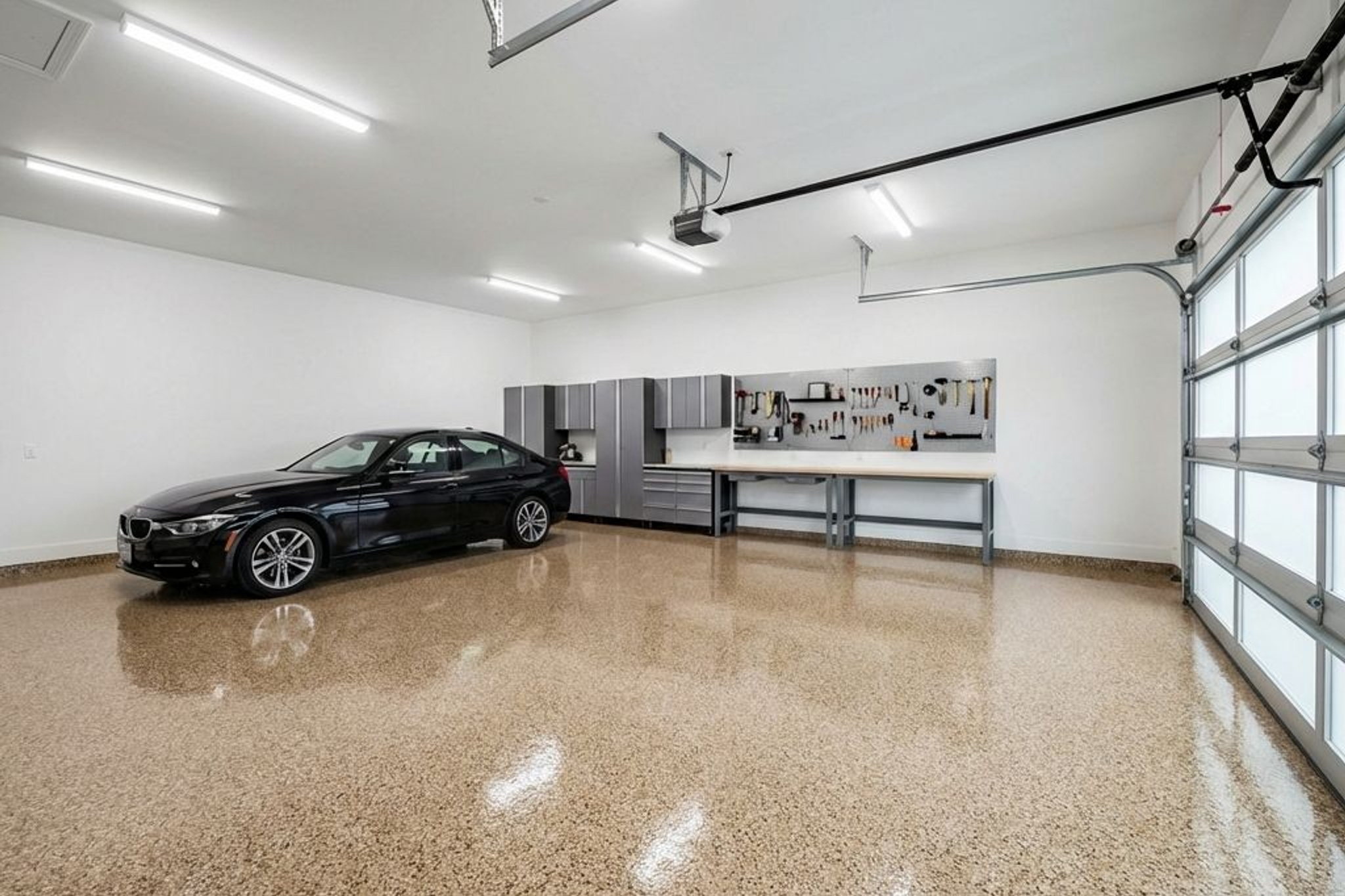
| Flake Epoxy | $4-7 | 10-20 years | Minimal | Garages, basements |
| Metallic Epoxy | $8-15 | 15-20 years | Minimal | Showrooms, high-end residential |
| Polished Concrete | $3-12 | 20+ years | Dust mop and burnish | Commercial, retail, lofts |
The numbers tell the story. Stain wins on initial cost and natural appearance. Epoxy wins on protection and low maintenance. Polished concrete wins on long-term durability but requires specialized equipment and skill. Each has a lane where it is the right answer.
Margin Insight
For contractors offering both stain and epoxy services: stain jobs have lower material costs but comparable labor hours to basic epoxy work. A 500 sq ft basement stain at $5/sq ft is $2,500 in revenue with about $300 in materials. A 500 sq ft flake epoxy at $6/sq ft is $3,000 with about $500 in materials. Margins are actually similar. The difference is that epoxy clients tend to be more referral-heavy because the visual transformation is more dramatic.
Where Stain Works Best
Concrete stain shines in spaces where the goal is to enhance concrete rather than cover it up. The client already has concrete and they like that it is concrete. They want it to look intentional, finished, and beautiful. They do not want it to look like a garage floor or a warehouse. Stain delivers that.
Patios and Outdoor Living Areas
Exterior concrete is where acid stain truly earns its reputation. The mottled, organic look blends naturally with landscaping, stone walls, and outdoor furniture. Sun-warmed earth tones — cola, English red, Malayan buff — complement almost any backyard design. And because the color is chemically bonded to the concrete, it will not peel or flake off like exterior paint does after a few seasons of UV and freeze-thaw.
Use a UV-stable sealer for exterior work. Solvent-based acrylic sealers are the standard because they breathe (allow moisture vapor to escape from the slab) while protecting the surface. Non-breathable sealers like epoxy trap moisture in exterior applications and blister within a year.
Basements (Dry Ones)
A dry basement with a clean slab is an ideal candidate for stain. The controlled environment means no UV degradation, no freeze-thaw stress, and minimal wear compared to a garage or patio. A single-color acid stain in coffee brown or cola transforms a gray utility basement into a finished living space for $2-4/sq ft. That is hard to beat on value.
Retail and Restaurant Floors
Stained concrete became a design staple in restaurants, coffee shops, and boutique retail in the early 2000s and it is still going strong. The industrial-meets-artisanal look fits the aesthetic these businesses cultivate. Scoring the slab into a tile pattern and staining alternating sections creates a custom floor for a fraction of what actual tile would cost. A 1,500 sq ft restaurant floor with scored tile pattern and two-color acid stain runs $7,500-$15,000 installed.
Existing Decorative Concrete
Stamped concrete that has faded. Old stained floors that need a color refresh. Colored concrete where the integral color has dulled over twenty years. Acid stain or water-based stain applied over these existing surfaces revives them at a fraction of the cost of tear-out and replacement. The existing texture and pattern remains — you are just renewing the color on top of it.
Pro Tip
When estimating stain jobs on older concrete, always do a test patch first. Thirty-year-old concrete has different calcium hydroxide levels than a fresh pour, which means acid stain reacts differently. Old slabs also may have been treated with curing compounds, sealers, or densifiers that block stain penetration. A fifteen-minute test patch reveals all of this before you commit to a price.
Where Stain Fails
Stain is not a protective coating. That single fact explains every application where it comes up short. Stain adds color but does not add chemical resistance, impact resistance, or abrasion resistance. The sealer on top provides some protection, but nothing close to what a 20-mil epoxy system delivers. Knowing where stain fails saves you from callbacks and unhappy clients.
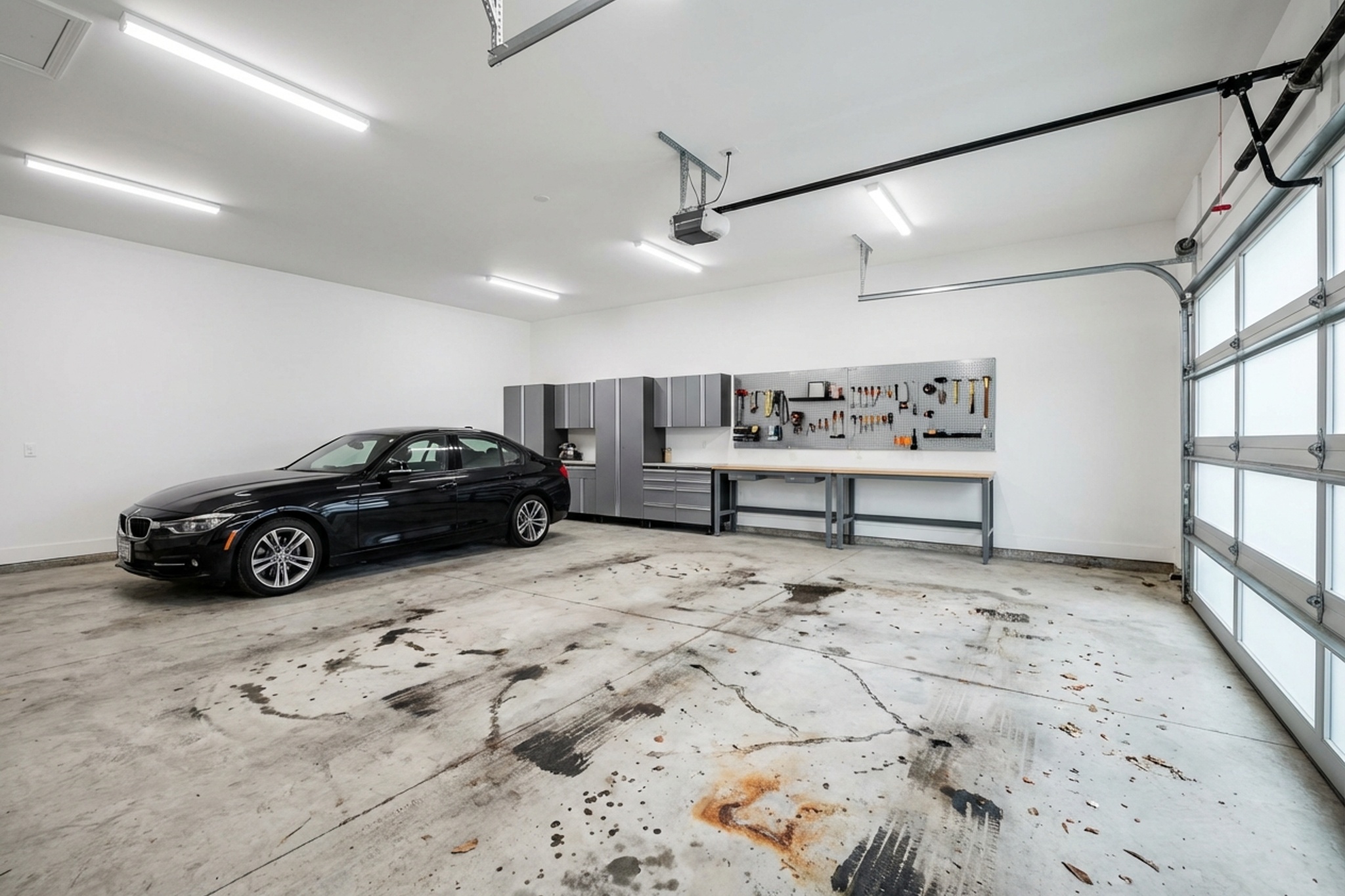
Garages with Vehicle Traffic
Stained garage floors look great for about six months. Then the hot tire marks appear. Then the oil drip stains. Then the road salt damage near the door. The acrylic sealer over stain is simply not built to handle the chemical and thermal abuse that garage floors take from vehicles. Tires at 150-200°F soften acrylic sealers and pull them up, taking color clarity with them.
If a client specifically wants the stained look in a garage, the honest answer is that they need an epoxy or polyaspartic system tinted to mimic stain. Some manufacturers make translucent tinted epoxies that approximate the stained look while providing actual protection. But actual acid stain under acrylic sealer in a working garage is a service call waiting to happen.
High-Traffic Commercial Floors
A stained coffee shop floor sees foot traffic from hundreds of people daily, chair legs scraping, spilled drinks, mopping with cleaning chemicals. The sealer wears through in high-traffic paths within 6-12 months, creating visible wear lanes where the color appears duller or lighter. Resealing the traffic areas every year is doable but it is a recurring cost and inconvenience that clients rarely appreciate upfront.
For truly high-traffic commercial applications, polished concrete with integrated dye is the better approach. The mechanical polishing process densifies the surface and traps the dye, creating a floor that gets harder to damage over time rather than easier.
Moisture-Heavy Basements
Below-grade slabs without proper vapor barriers transmit moisture upward through the concrete. That moisture pushes sealers off the surface, causing white hazing (blushing) in acrylic sealers and peeling in film-forming sealers. On an acid-stained floor, sealer failure means the unprotected stain is exposed to foot traffic and spills, and without that sealer the color integrity degrades fast.
- Visible signs of moisture problems: white powder on the surface (efflorescence), sealer blushing or peeling, damp spots that darken and lighten with weather changes.
- Test before committing: tape a 2x2 ft piece of plastic sheeting to the slab for 48 hours. If moisture collects underneath, the slab is too wet for stain. Period.
- In high-moisture basements, a moisture-mitigating epoxy primer ($2-3/sq ft additional) can solve the problem, but at that point the total cost approaches a full epoxy system anyway.
Floors with Previous Coatings or Contamination
Acid stain cannot react through paint, epoxy, polyurethane, or curing compounds. If the slab has any existing coating, that coating must be completely removed by diamond grinding before stain will work. Grinding a garage floor that was previously epoxied adds $1.50-3.00/sq ft to the job. Sometimes the old coating has penetrated deeply enough that grinding alone does not clear it, and the stain develops with blotchy dead spots. This is another reason to test patch before quoting.
Warning
Oil-stained concrete is the most common surprise on stain jobs. Automotive oil, cooking grease, hydraulic fluid — they penetrate concrete deeply and block acid stain reaction completely. The oil spot stays gray while the surrounding concrete develops color. Degreasing alone does not fix deep oil contamination. If the slab has significant oil staining, recommend epoxy over stain.
Stain vs Epoxy: Which to Recommend
This is the question contractors get asked most often. The honest answer is that stain and epoxy serve different clients with different priorities. One is not universally better than the other. But one is almost always better for a specific situation, and being able to identify which one quickly builds trust with the client and saves everyone time.
Stain vs Epoxy: Side-by-Side Decision Guide
| Factor | Concrete Stain | Epoxy Coating |
|---|---|---|
| Initial cost | $2-10/sq ft | $3-15/sq ft |
| Appearance | Natural, translucent, organic | Uniform, glossy, film-based |
| Color options | Limited (acid), unlimited (water-based) | Unlimited + flake, metallic, quartz |
| Chemical resistance | Minimal (sealer-dependent) | High (inherent to epoxy film) |
| Impact resistance | None (bare concrete) | High (20+ mil coating absorbs impact) |
| UV stability | Excellent (acid stain) | Poor without polyaspartic topcoat |
| Moisture tolerance | Breathable with acrylic sealer | Requires dry slab or moisture mitigation |
| Maintenance | Reseal every 1-3 years | Minimal — mop and occasional recoat |
| Lifespan (color) | 20+ years (acid) | 10-20 years |
| Texture change | None — feels like concrete | Smooth, glossy surface |
| Exterior use | Yes (acid stain + acrylic sealer) | No (epoxy chalks and yellows outdoors) |
| Install time | 2-3 days | 2-3 days |
Recommend Stain When...
- The client wants a natural, warm, lived-in look — not a showroom finish
- The floor is exterior (patio, pool deck, walkway)
- Budget is the primary constraint and the slab is in good condition
- The space has low chemical exposure (no vehicles, no industrial use)
- The client values the look of concrete itself and does not want to cover it
- Existing decorative concrete needs a color refresh, not a full resurface
Recommend Epoxy When...
- The floor needs chemical resistance (garages, workshops, commercial kitchens)
- Impact resistance matters (dropped tools, heavy equipment)
- The client wants a dramatic visual transformation, not a subtle enhancement
- Low maintenance is a priority — no annual resealing
- The slab has significant damage, staining, or old coatings that need covering
- The space has moisture concerns that require a vapor-mitigating system
The 2026 trend data shows warm earth tones dominating in both stain and epoxy. Greige, warm taupe, terracotta, and sand tones have replaced the cool industrial grays that led the market from 2018-2024. Homeowners want warmth and texture. That trend actually favors stain over epoxy for residential interiors, because stain produces the organic variation that cool-gray epoxy never could. But for garages, basements with moisture, and commercial spaces that need protection, epoxy remains the right call regardless of trends.
Margin Insight
If you offer both stain and epoxy, the stain consultation is one of the best lead generation paths to an epoxy sale. About 30% of clients who inquire about staining end up choosing epoxy once they understand the maintenance requirements and protection differences. Present both options honestly, show visualizations of each, and let the client decide. You close a higher-ticket job without hard selling.
Featured Materials
Acid Stain
Cola Acid Stain
Deep brown-black with rich mottling. The most popular acid stain color for residential and commercial floors.
Acid Stain
English Red
Warm terra cotta with natural variation. Brings warmth to patios and rustic interiors.
Water-Based Stain
Saddle Tan
Consistent golden-brown tone. Predictable results on any slab condition.
Concrete Dye
Charcoal Dye
Modern dark gray for polished concrete. Fast application, dramatic finish.
Show Your Client the Finished Floor
Upload a photo of their concrete, choose a stain tone, and generate a photorealistic preview, then send a reviewed proposal while the finish is still fresh.