Polyurea vs Epoxy Flooring: What Contractors Actually Need to Know
Chemistry differences, real cost breakdowns, and why the best floor system usually combines both. No franchise sales pitch included.
What Is Polyurea and How Is It Different from Epoxy?
250–500%
Polyurea Elongation
vs 2–5% for epoxy
–20°F to 140°F
Application Range
Polyurea substrate temp
5–15 sec
Gel Time (pure polyurea)
Spray-applied systems
Polyurea is an elastomeric coating formed by reacting an isocyanate with an amine-terminated resin. If that sentence made your eyes glaze over, here is the practical version: polyurea is flexible, fast-curing, and chemically resistant. Epoxy is rigid, slow-curing, and adhesion-dominant. They solve different problems, and neither one replaces the other.
The chemistry matters because it drives every performance difference you will see on the job. Epoxy is a two-part system where resin and hardener cross-link into a dense, glass-like plastic. Strong bond to concrete. Excellent compression strength. Zero flexibility. A hairline crack in the slab will telegraph straight through an epoxy coating and split it open. Polyurea forms a rubbery membrane that can stretch 250-500% before breaking. That same crack? Polyurea bridges it without flinching.
Where this gets confusing is marketing. Franchise coating companies have spent years positioning polyurea as the premium upgrade that makes epoxy obsolete. That is a sales narrative, not a technical reality. Epoxy and polyurea each have clear advantages, and the smartest contractors use them together rather than picking sides.
Good to Know
When a homeowner says they want "polyurea," they usually mean polyaspartic. Pure polyurea gels in seconds and requires plural-component spray equipment. The hand-rollable products marketed as polyurea for garage floors are almost always polyaspartic polyurea, which is a modified subset with a longer pot life. More on that distinction below.
Polyurea vs Epoxy: The Real Comparison
Forget the marketing brochures. Here is how these two chemistries actually stack up across the metrics that matter on residential and commercial jobs.
Polyurea vs Epoxy: Full Comparison
| Property | Epoxy | Polyurea / Polyaspartic |
|---|---|---|
| Adhesion to concrete | Excellent (penetrates pores) | Good (surface bond, needs profile) |
| Flexibility / elongation | 2-5% (rigid, cracks with substrate) | 250-500% (bridges cracks) |
| Abrasion resistance (Taber) | 20-45 mg loss / 1,000 cycles | 10-40 mg loss / 1,000 cycles |
| Chemical resistance | Good (most automotive fluids) | Excellent (solvents, acids, fuels) |
| UV stability | Poor (yellows without topcoat) | Excellent (aliphatic formulas) |
| Cure time | 24-72 hrs to foot traffic | 2-6 hrs to foot traffic |
| Application temp range | 50-90°F substrate | -20 to 140°F substrate |
| Pot life (working time) | 30-60 minutes | 10-30 minutes (polyaspartic) |
| Decorative options | Flake, metallic, quartz, solid | Flake, solid (limited metallics) |
| Moisture tolerance | Moderate (needs <75% RH slab) | Low (requires vapor barrier on wet slabs) |
| Installed cost / sq ft | $4-10 | $7-15 |
| Typical lifespan | 5-10 years (standalone) | 10-20+ years (with proper prep) |
| DIY friendly | Yes (kits available) | No (fast cure, requires experience) |
| Odor during install | Moderate to high | Low to moderate |
The lifespan numbers deserve context. Epoxy at 5-10 years assumes a standalone system with an epoxy topcoat and no UV protection. Epoxy as part of a hybrid system with a polyaspartic or polyurethane topcoat lasts 10-20 years because the topcoat is the wear surface, not the epoxy itself. Polyurea longevity numbers assume professional installation with proper concrete prep. Slap polyurea on poorly prepped concrete and it peels inside a year regardless of how good the chemistry is.
Warning
Polyurea bonds while searching for moisture but stops bonding once it contacts moisture. If your slab has high moisture vapor emission rates, polyurea can delaminate from underneath. Always run a calcium chloride test (ASTM F1869) or relative humidity probe (ASTM F2170) before specifying polyurea on any slab. Epoxy is more forgiving of moderate moisture, though not immune.
Polyurea vs Polyaspartic: Clearing Up the Confusion
Polyaspartic is a type of polyurea. Specifically, it is an aliphatic polyurea ester that has been modified to cure slower than standard aromatic polyurea. Think of it this way: all polyaspartics are polyurea, but not all polyurea is polyaspartic. The distinction matters because they perform differently on the job site.
Pure Polyurea vs Polyaspartic Polyurea
| Property | Pure (Aromatic) Polyurea | Polyaspartic Polyurea |
|---|---|---|
| Application method | Plural-component spray gun | Roller or squeegee (hand-applied) |
| Gel time | 5-15 seconds | 10-30 minutes |
| UV stability | Poor (yellows over time) | Excellent (aliphatic = UV stable) |
| Concrete adhesion | Weaker (cures too fast to penetrate) | Stronger (slower cure = better wet-out) |
| Equipment cost | $15,000-40,000 spray rig | Standard rollers and squeegees |
| Typical use in flooring | Joint filler, crack repair, primer | Topcoat, full coating system |
| Installed cost | $8-15/sq ft | $7-12/sq ft |
Pure aromatic polyurea is what you see on truck bed liners, bridge decks, and industrial containment. It requires heated plural-component spray equipment that costs $15,000 to $40,000. The material gels in seconds, which means it cannot soak into concrete pores the way epoxy does. For floor coatings, pure polyurea is used primarily as a joint filler or crack repair material, not as a full-coverage system.
Polyaspartic polyurea is the product that actually competes with epoxy on garage floors. It rolls on with standard tools, has a workable pot life of 10-30 minutes, and cures fast enough to get a full system down in one day. When the franchise guys talk about their "polyurea floor," they mean polyaspartic. When the industrial waterproofing crew talks about polyurea, they mean the spray-applied stuff. Same family, very different animals.
Pro Tip
When a customer asks about polyurea because they saw a franchise ad, explain the difference briefly and then pivot to the system conversation. The chemistry is less important than the system design: what goes on the concrete first, what goes on top, and how the layers work together. That is where you add value as a contractor.
Where Polyurea Shines
Polyurea is not a universal upgrade over epoxy. It is a better choice in specific situations. Know these, and you can spec the right product for each job instead of defaulting to whatever you have on the truck.
Speed-Critical Projects
A polyaspartic system can go from bare concrete to driveable surface in 24 hours. Primer in the morning, base coat by noon, topcoat by mid-afternoon, car parked the next day. Epoxy needs 24-72 hours between coats depending on temperature and product. A full epoxy system with proper cure times takes 3-5 days to hand back to the client. For commercial spaces where downtime equals lost revenue, polyaspartic's speed is worth the price premium every time.
Extreme Temperature Environments
Polyurea can be applied at substrate temperatures from -20°F to 140°F. Epoxy stalls below 50°F and rushes past you above 90°F. If you are coating an unheated warehouse in Minnesota in November or a loading dock in Phoenix in July, polyurea is the only option that will cure properly. Once cured, polyurea maintains performance across a range of -40°F to 250°F. Epoxy starts softening above 140°F.
Crack-Prone Slabs
That 250-500% elongation is not a lab curiosity. On slabs with active cracking, settlement movement, or heavy thermal cycling, polyurea bridges cracks that would split an epoxy coating in half. Industrial facilities with heavy forklift traffic on older slabs, garages in freeze-thaw climates, and warehouse floors over expansive soils all benefit from polyurea's flexibility.
Chemical Exposure Areas
Polyurea resists a wider range of solvents, acids, and industrial chemicals than standard epoxy. Novolac epoxy (a specialty formulation) can match polyurea's chemical resistance, but it costs more and is harder to apply. For auto shops, manufacturing floors, and anywhere aggressive chemicals hit the floor regularly, polyurea topcoats outperform standard epoxy clear coats.
Polyurea Strengths and Limitations
Pros
- Full system installed in one day (polyaspartic)
- UV stable without a separate topcoat (aliphatic formulas)
- Bridges cracks up to 1/16" with 250-500% elongation
- Performs in extreme temperatures (-40°F to 250°F once cured)
- Superior chemical and abrasion resistance
- Low odor during application compared to epoxy
Cons
- Fast cure = short working time, less forgiveness for mistakes
- Poor moisture tolerance on damp slabs
- Weaker concrete adhesion than slow-cure epoxy
- Limited decorative options compared to epoxy (fewer metallic effects)
- Higher material cost and steeper learning curve
- Franchise-inflated pricing confuses the market
Where Epoxy Still Wins
Polyurea gets the hype. Epoxy does the work. There are solid reasons epoxy remains the dominant floor coating chemistry worldwide, and they go beyond cost.
Adhesion
Epoxy's slower cure time is actually an advantage for adhesion. The liquid resin stays fluid long enough to soak deep into the concrete pore structure, creating a mechanical bond that is extremely difficult to break. Polyaspartic, even with its extended pot life compared to pure polyurea, still cures faster than epoxy. That means it sits on the surface more than it penetrates. On properly prepped concrete with a good CSP 2-3 profile, both adhere well. On less-than-perfect prep, epoxy is more forgiving.
Decorative Versatility
Metallic effects, full-broadcast flake, quartz aggregate, custom color matching, multi-layer decorative systems. Epoxy supports all of them because its longer pot life gives you time to manipulate the material. Metallic epoxy works because you have 20-40 minutes to push pigments around with squeegees, rollers, and blowers. Try that with polyaspartic and the material is already gelling before you finish your first pass. Flake broadcast works in polyaspartic, but the window for throwing chips is tighter and less forgiving.
Cost Advantage
Epoxy materials cost 30-50% less than polyaspartic materials. On a 500 sq ft garage, that difference is $400-800 in material alone. For price-sensitive residential clients, an epoxy base with a polyaspartic topcoat delivers 90% of the performance at a meaningfully lower price than a full polyaspartic system. For commercial jobs measured in thousands of square feet, the material savings add up fast.
DIY Accessibility
Homeowners can buy epoxy kits from Home Depot for under $200 and get a passable result with decent prep work. Professional results? Rarely. But a functional coating that lasts 2-3 years? Achievable for a motivated DIYer. Polyaspartic kits exist but the fast cure punishes beginners. Lap marks, roller lines, uneven coverage. The material is setting up while you are still figuring out your technique. Every professional installer knows this, which is why polyaspartic callbacks from DIY attempts are becoming a steady lead source.
Margin Insight
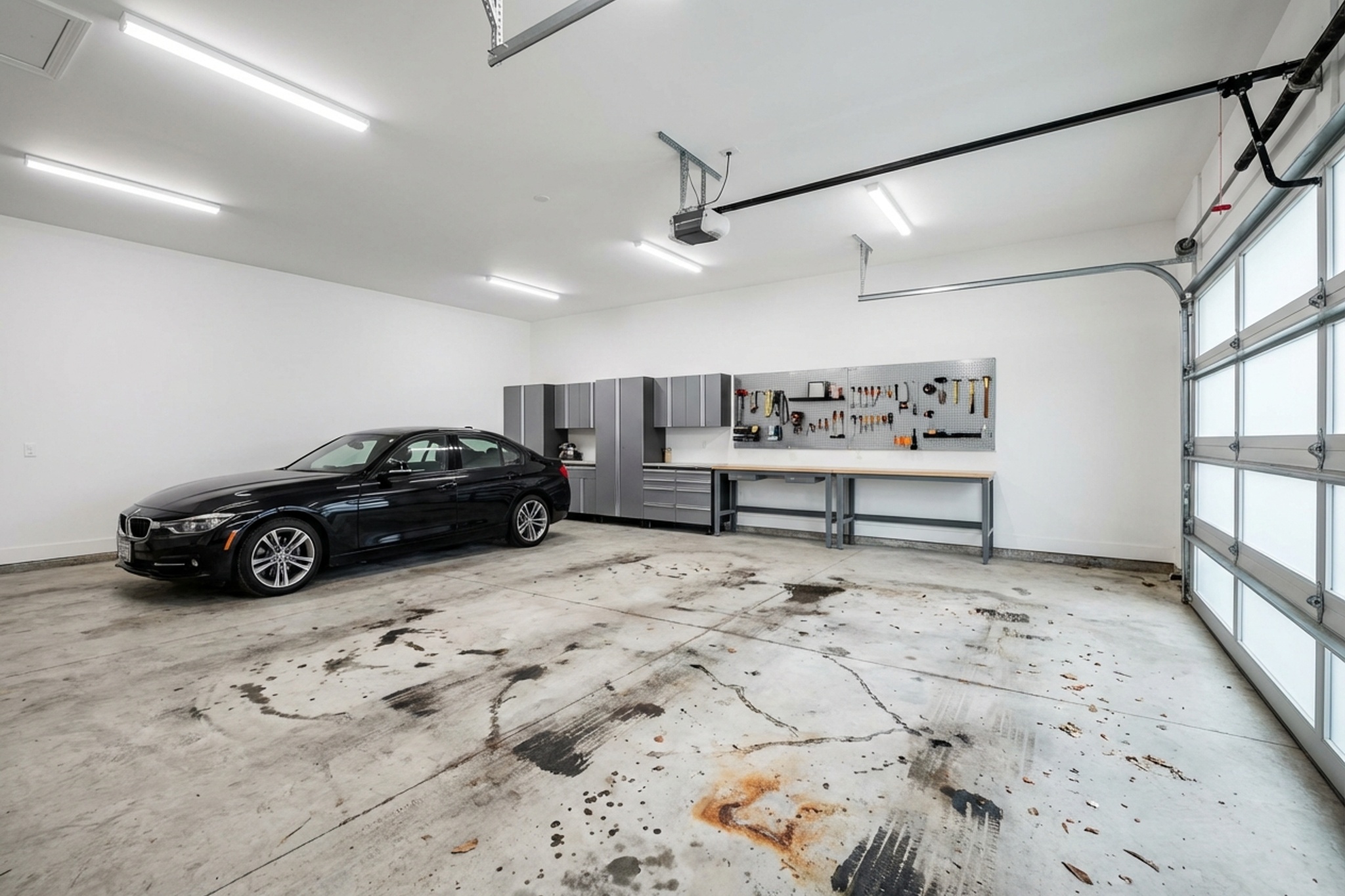
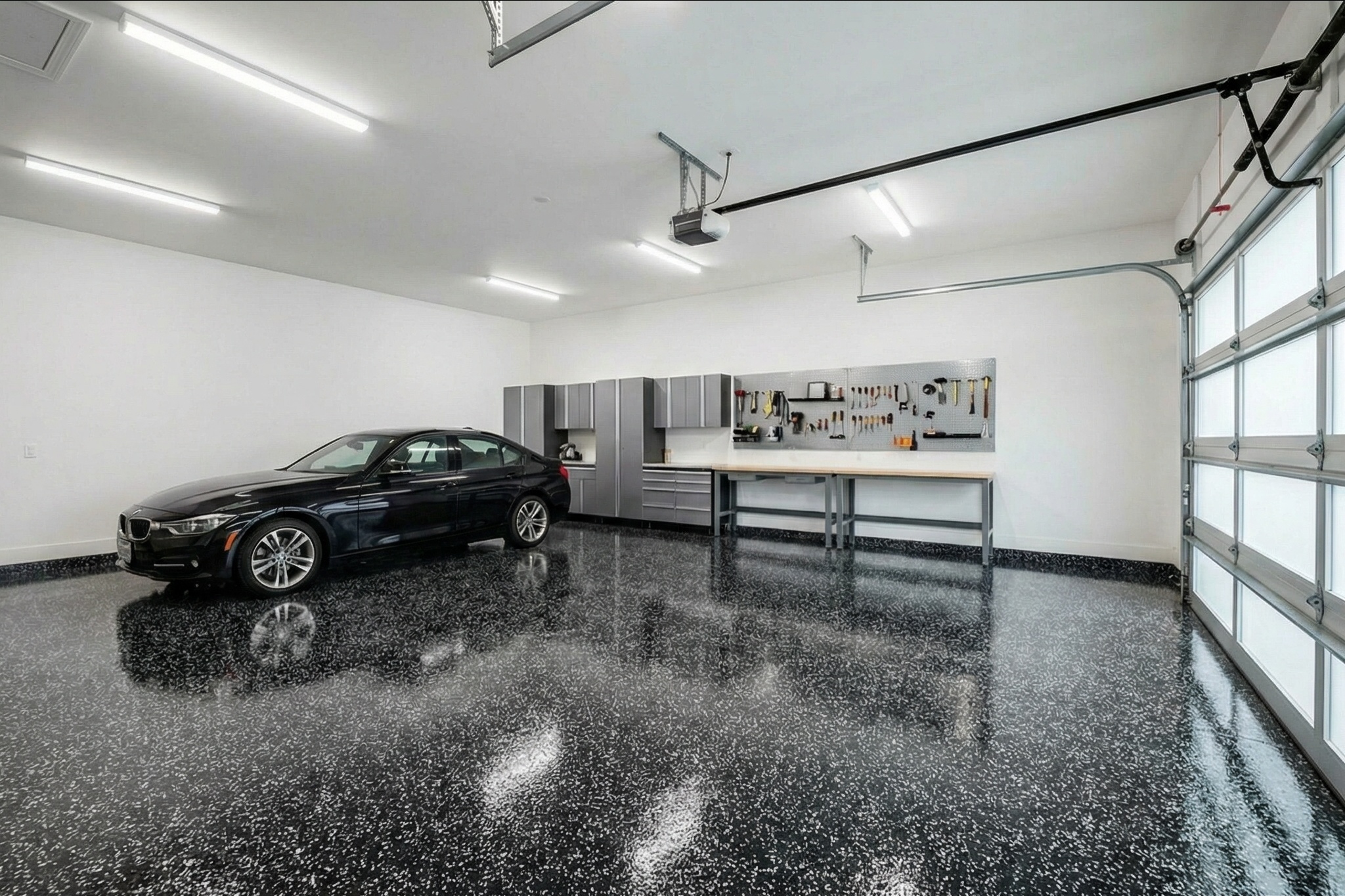
Epoxy base + polyaspartic top is the sweet spot for most residential garage jobs. Material cost runs about $2-4/sq ft. Installed at $5-9/sq ft, your margin stays in the 40-55% range. A full polyaspartic system at $7-12/sq ft installed gives you a larger ticket but the material cost eats into the margin unless you are running volume.
Cost Comparison: Real Numbers, Not Franchise Numbers
$4–10/sq ft
Epoxy System Installed
Base + topcoat, professional
$7–15/sq ft
Polyurea System Installed
Full polyaspartic or hybrid
$2,000–$5,800
Typical 2-Car Garage
Polyaspartic, 400–500 sq ft
Pricing in this market is all over the place, and the reason is franchise inflation. National one-day coating franchises charge $7-15/sq ft for systems where the material cost is $1.50-3.00/sq ft. Their marketing budgets, franchise fees, and national ad campaigns get baked into the price. An independent contractor running the same chemistry often comes in at $5-9/sq ft and makes a healthy margin doing it.
Cost Breakdown by System Type
| System | Material/sq ft | Installed/sq ft | 2-Car Garage (450 sq ft) | Lifespan |
|---|---|---|---|---|
| Epoxy only (with epoxy topcoat) | $1.00-2.50 | $4-7 | $1,800-$3,150 | 5-10 years |
| Epoxy base + polyaspartic top | $2.00-3.50 | $5-9 | $2,250-$4,050 | 10-20 years |
| Full polyaspartic system | $2.50-4.50 | $7-12 | $3,150-$5,400 | 10-20 years |
| Franchise polyurea install | $1.50-3.00 | $9-15 | $4,050-$6,750 | 10-20 years |
Look at the franchise row. The material cost is the same or lower than a hybrid system, but the installed price is 40-70% higher. That spread covers franchise royalties (typically 6-8% of revenue), national marketing fees (another 2-3%), and lead generation costs. The actual product going on the floor is not premium. The price is.
This is not a knock on all franchise operations. Some run excellent crews with thorough prep work. But when a homeowner tells you they got a quote for $12/sq ft from a one-day franchise, you should understand what is driving that number. It is not the chemistry.
The One-Day Shortcut Problem
One-day polyurea systems skip the slow-cure epoxy primer that builds real adhesion. The polyurea base coat cures so fast that it bonds to the surface without deeply penetrating concrete pores. On slabs with any moisture pressure, these coatings delaminate within 1-3 years. Multiple franchise warranty agreements exclude "moisture-related failures," which is the most common failure mode. Read the warranty exclusions, not just the headline coverage period.
Long-Term Cost of Ownership
An epoxy-only system at $4/sq ft that lasts 7 years costs $0.57/sq ft per year. A hybrid epoxy-polyaspartic system at $7/sq ft that lasts 15 years costs $0.47/sq ft per year. A full polyaspartic at $10/sq ft lasting 18 years costs $0.56/sq ft per year. On a cost-per-year basis, the hybrid approach is the best value for most residential applications. Full polyaspartic makes sense when the speed premium or operating conditions justify the higher upfront cost.
The Hybrid Approach: Best of Both Worlds
The best floor coating system in most situations is not polyurea or epoxy. It is both. An epoxy primer and base coat for adhesion and build, topped with a polyaspartic clear or pigmented topcoat for UV resistance, chemical protection, and fast return to service. This is not a compromise. It is how the chemistry is designed to work.
Diamond grind to CSP 2-3
Planetary grinder with 30/40-grit metal-bond diamonds. Clean the profile with a vacuum and tack cloth. This is non-negotiable for any system. No amount of chemistry overcomes bad prep.
Apply 100% solids epoxy primer
Roll a penetrating epoxy primer at 4-6 mils wet. The epoxy soaks into the concrete pore structure during its slow cure, creating a mechanical bond that polyaspartic alone cannot match. Let it tack per manufacturer recoat window.
Apply pigmented epoxy base coat
Roll the colored base coat and broadcast flake or aggregate while wet. Epoxy gives you 30-60 minutes of working time for even coverage and full chip broadcast. A polyaspartic base coat gives you 10-15 minutes. That difference determines your flake coverage quality.
Scrape and vacuum
After the base cures (12-24 hours), scrape loose flake with a floor scraper and vacuum thoroughly. Any debris trapped under the topcoat will be visible and permanent.
Apply polyaspartic topcoat
Roll the polyaspartic at 5-8 mils wet. It self-levels, resists UV yellowing, handles hot tire pickup without softening, and cures to foot traffic in 4-6 hours. Two thin coats beat one thick coat.
Total timeline: Day one is prep and epoxy prime. Day two is base coat and flake broadcast. Day three morning is scrape, vacuum, and topcoat. Client parks on it the next morning. Three working days. A full polyaspartic system condenses that to one long day, but trades away the deep-penetrating epoxy bond.
"Epoxies begin to solidify slower than polyaspartics, which allows greater time in a liquid, viscous state to soak into the pores and scratch pattern in the concrete. This thickness helps to level minor imperfections and creates a powerful mechanical bond."
Pro Tip
Position the hybrid system as your standard recommendation. Quote it as "professional-grade epoxy with UV-stable topcoat." If the client needs a faster turnaround, offer the full polyaspartic system as the speed upgrade. If they need to save money, offer epoxy with a polyurethane topcoat as the value option. Three tiers, one conversation, and the hybrid in the middle closes most often.
How to Choose for Your Business
If you are a flooring contractor deciding which systems to offer, here is the framework. Your choice depends on your market, your crew's experience level, and the types of jobs you pursue.
Start with the Hybrid System
Epoxy base with polyaspartic topcoat should be your default residential offering. It covers 80% of garage and basement jobs. The epoxy gives you working time to do quality decorative work. The polyaspartic topcoat gives you UV protection and fast return to service. Material cost is manageable and the system performs for 10-20 years.
Add Full Polyaspartic for Speed Jobs
Commercial work where downtime costs the client money. Rental properties getting prepped between tenants. Clients who absolutely cannot give up their garage for more than 24 hours. Full polyaspartic is the premium speed option, priced accordingly. Make sure your crew has installed at least 10-15 polyaspartic jobs before quoting tight one-day timelines. The fast cure does not forgive hesitation.
Know When to Spec Pure Polyurea
Spray-applied polyurea is a different market segment: containment, waterproofing, industrial protection. Unless you are investing in plural-component spray equipment and training, this is not your lane. Use polyurea joint fillers and crack repair products as part of your prep toolkit, but leave full polyurea spray systems to the specialty contractors.
The Decision Matrix
Which System for Which Job
| Job Type | Best System | Why |
|---|---|---|
| Residential garage (standard) | Epoxy base + polyaspartic top | Best adhesion, decorative options, and value |
| Garage with metallic finish | Metallic epoxy base + polyaspartic top | Epoxy pot life allows pigment manipulation |
| Commercial with tight schedule | Full polyaspartic | One-day install minimizes business disruption |
| Unheated warehouse (cold climate) | Polyaspartic base and top | Cures at low temperatures where epoxy cannot |
| Chemical processing / auto shop | Epoxy primer + polyurea topcoat | Maximum chemical resistance on top layer |
| Basement (moisture concerns) | Epoxy with moisture mitigation primer | Epoxy tolerates moderate moisture better |
| Outdoor / UV-exposed area | Full polyaspartic | Inherent UV stability, no yellowing |
| Budget-conscious residential | Epoxy base + polyurethane top | Lowest cost with decent performance |
The biggest mistake contractors make in this space is picking one chemistry and forcing it onto every job. Epoxy-only installers lose commercial speed jobs. Polyurea-only installers overprice residential work that does not need one-day turnaround. The contractors who win long-term are the ones who understand both chemistries and spec the right system for each situation.
Margin Insight
Carrying both epoxy and polyaspartic products adds maybe $1,500-2,000 to your inventory. That investment lets you bid on every job type in your market instead of passing on work that does not fit your single-chemistry approach. On a 450 sq ft garage, the hybrid system at $7/sq ft gives you $3,150 in revenue. Material: ~$1,200. Labor (2-person crew, 2 days): ~$900. Profit: $1,050. Scale that to 3-4 jobs per week and the numbers work.
Featured Materials
Epoxy Flake
Domino Flake
Black and gray chips on charcoal base. The top seller for garages where durability meets clean aesthetics.
Solid Epoxy
Battleship Gray
Uniform gray with polyaspartic topcoat. Utility-first, low maintenance, fast to install.
Metallic Epoxy
Graphite Metallic
Dark metallic with flowing pattern. The premium upsell that only works with epoxy base chemistry.
Polyaspartic System
Saddle Tan
Warm neutral in a full polyaspartic build. One-day install for speed-critical commercial work.
Show Clients the Finished Floor Before You Start
Upload a photo of the space, pick epoxy or polyaspartic, and generate a photorealistic visualization, then close with a preview and proposal they can review.