Epoxy Sample Boards: What They Tell a Customer, and What They Can't
A sample board answers how the floor feels. It can't answer how the whole floor will look in the customer's garage. Here is where a board helps at the estimate and where it runs out.
What Does an Epoxy Sample Board Tell the Customer?
A sample board tells the customer how the floor feels and what one small piece of it looks like up close: the grit in the topcoat, the size of the chips, the sheen, and one blend under the light in their hand. It doesn't show what they are buying, which is the whole floor in their own garage.
What a Sample Board Can and Can't Show
| A board shows | A board can't show |
|---|---|
| How the topcoat feels, including any grit added for traction | The whole floor, often 400 to 500 sq ft in a 2-car garage |
| How big the chips are | How the color reads in that garage's light, by the open door and at the back wall |
| How glossy or satin the finish is | How the floor looks next to their walls, cabinets and car |
| One blend or color, held in the hand | A metallic floor, which never pours the same way twice |
5" × 7"
Largest single finished sample in Torginol's hard-sample program
Also sold as a 2" × 3" swatch
400–500 sq ft
Typical 2-car garage floor
Range used in our epoxy cost guide
3 chip sizes
Torginol flake
1/4", 1/8" and 1/16"
ShowFloor shows the customer the rest: a photorealistic picture of the blend you would install across a photo of their own garage, in that garage's light, before you quote it. The board stays in the kit for touch.
What Coating Contractors Bring to the Estimate
Most estimate kits hold some mix of the formats below. Manufacturers sell several of them directly. Torginol, for example, sells finished hard samples as a 2" × 3" swatch or a 5" × 7" tile, plus a ring-bound sample book you build from 6 to 18 of the 5" × 7" tiles (Torginol).
Common Estimate Samples and What Each One Leaves Out
| What you bring | What it is | What the customer learns | What it leaves out |
|---|---|---|---|
| Hand sample | A small finished piece of one system | Texture, sheen and one blend up close | Everything past the edge of the sample |
| Sample book or fan deck | Several finished samples bound together | How blends compare side by side | How any one of them looks across a floor |
| Loose flake | Bagged chips of each color and size | Chip size and the colors in a blend | What the chips look like broadcast and sealed |
| Large sample board | A board built in your shop or bought, often 12" × 12" or more | A bigger patch of the real system and topcoat | Still about one square foot of a 400 to 500 sq ft floor |
| Photos of past jobs | Your portfolio on a phone or tablet | What a finished floor can look like | Someone else's garage, in someone else's light |
Every item on that list shows a piece of a floor or a floor that belongs to someone else. None of them shows the customer's own garage with the new floor down. ShowFloor does: the finish you would quote, across a photo of their garage.
What a Board Does Well
A board is the only thing at the estimate the customer can touch. That matters on a garage floor. People want to know whether it will feel slick in socks, how rough the anti-slip grit is, and whether satin looks dull next to gloss. The board answers those in a few seconds.
Chip size
Chip size is easier to judge in hand than in words. Torginol makes its flake in 1/4", 1/8" and 1/16" sizes and calls 1/4" its most popular. It describes smaller flake as more natural and even in tone, closer to stone, and larger flake as bolder, with each color in the blend showing more distinctly (Torginol). How densely the chips are spread changes the look too; the full vs partial broadcast guide covers that.
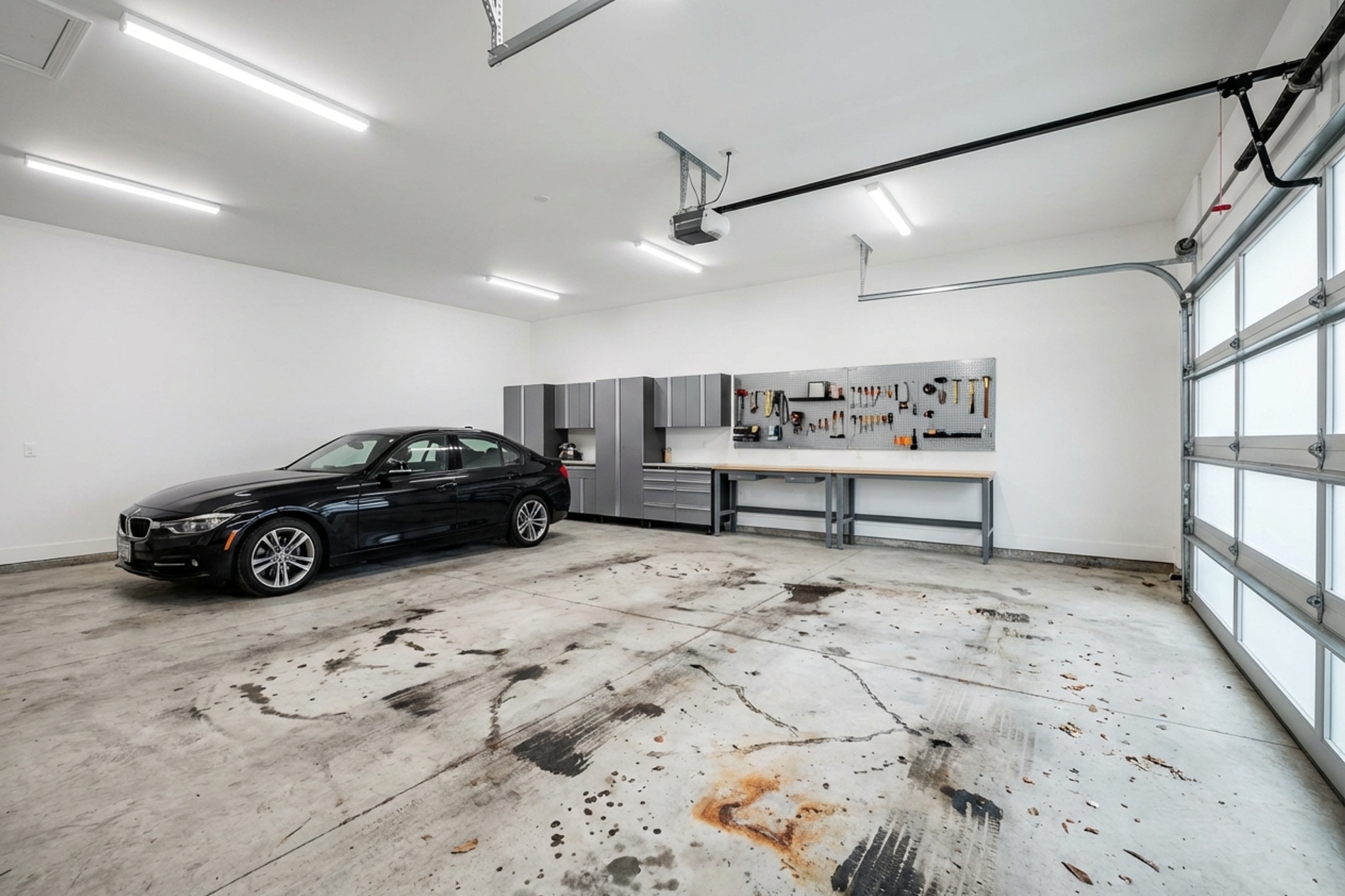
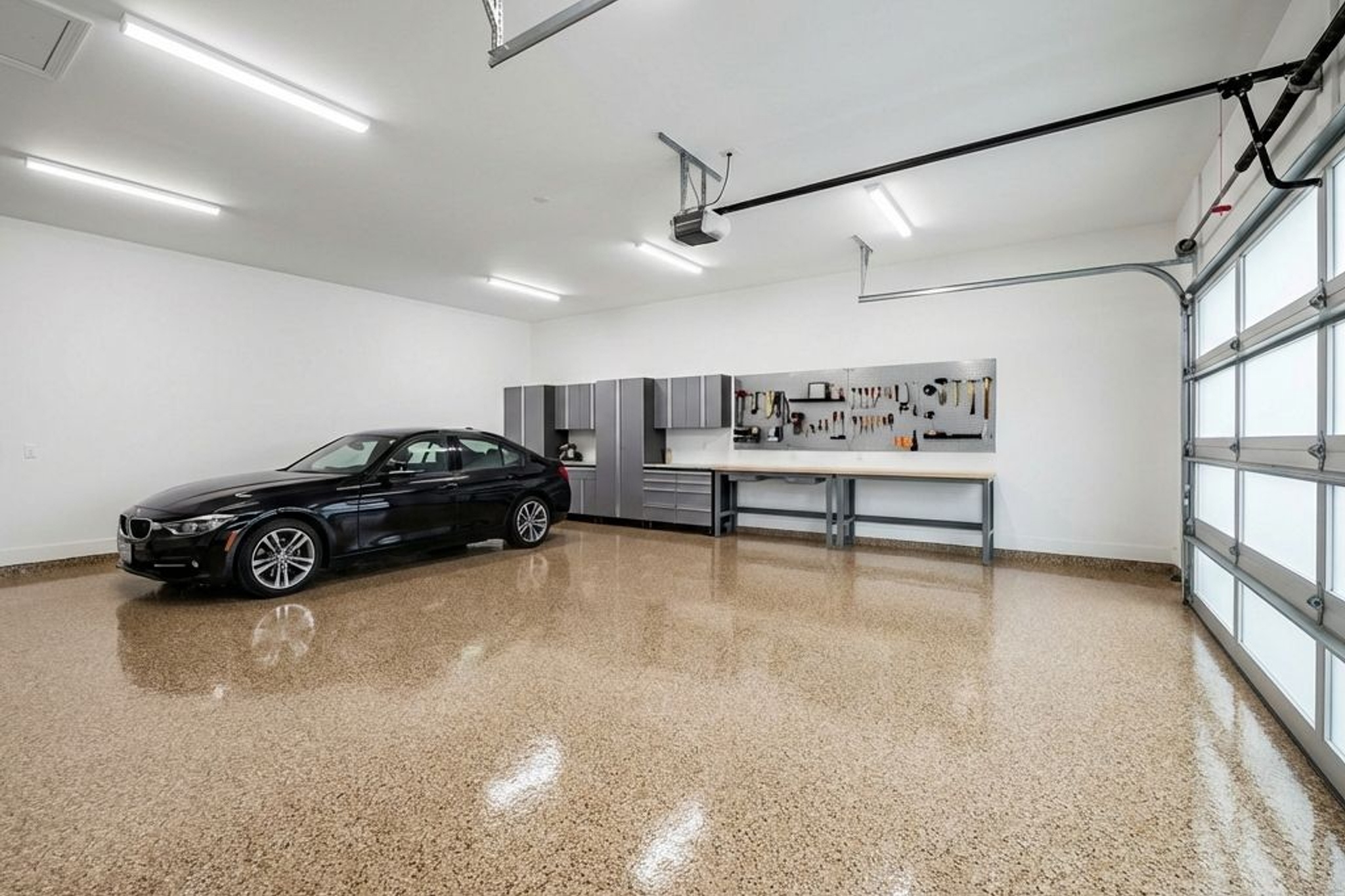
What the board can't show is how that pattern reads across the whole slab, from where the customer will stand every day. A preview on a photo of their garage shows the blend at that distance.
What a Board Can't Show
The customer isn't buying the board. They're buying the floor, and three things about the floor never fit on a board.
The whole floor
A 5" × 7" tile is 35 square inches. A 2-car garage floor runs about 400 to 500 sq ft. At 450 sq ft, that's roughly 1,850 of those tiles laid edge to edge. Troy Lemon, a decorative concrete contractor writing in Concrete Decor, told contractors to be realistic about the gap between a sample made in the shop and the same finish in real site conditions at full scale (Concrete Decor).
A blend that looks lively in the hand can read busy across a whole slab, and a quiet gray can go flat. ShowFloor shows the blend across the entire floor in their photo, so the customer judges it at the size they will live with.
That garage's light
Light changes color. Sherwin-Williams tells paint customers that light can dramatically change how some colors look, and to check a sample in different light through the day (Sherwin-Williams). A garage floor gets daylight from the open door, shade at the back wall and whatever fixtures hang from the ceiling.
The board sees none of that. It only sees the light wherever the customer happens to be holding it. A preview built on a photo of their garage shows the floor in that garage's own light: brighter by the door, deeper toward the back.
Their walls, cabinets and car
A customer picks a floor for a room. A floor color reads differently against white drywall than against dark wood cabinets, and a board held at arm's length sits next to neither. On a photo of the space, the floor is right there against their walls, storage, workbench and car.
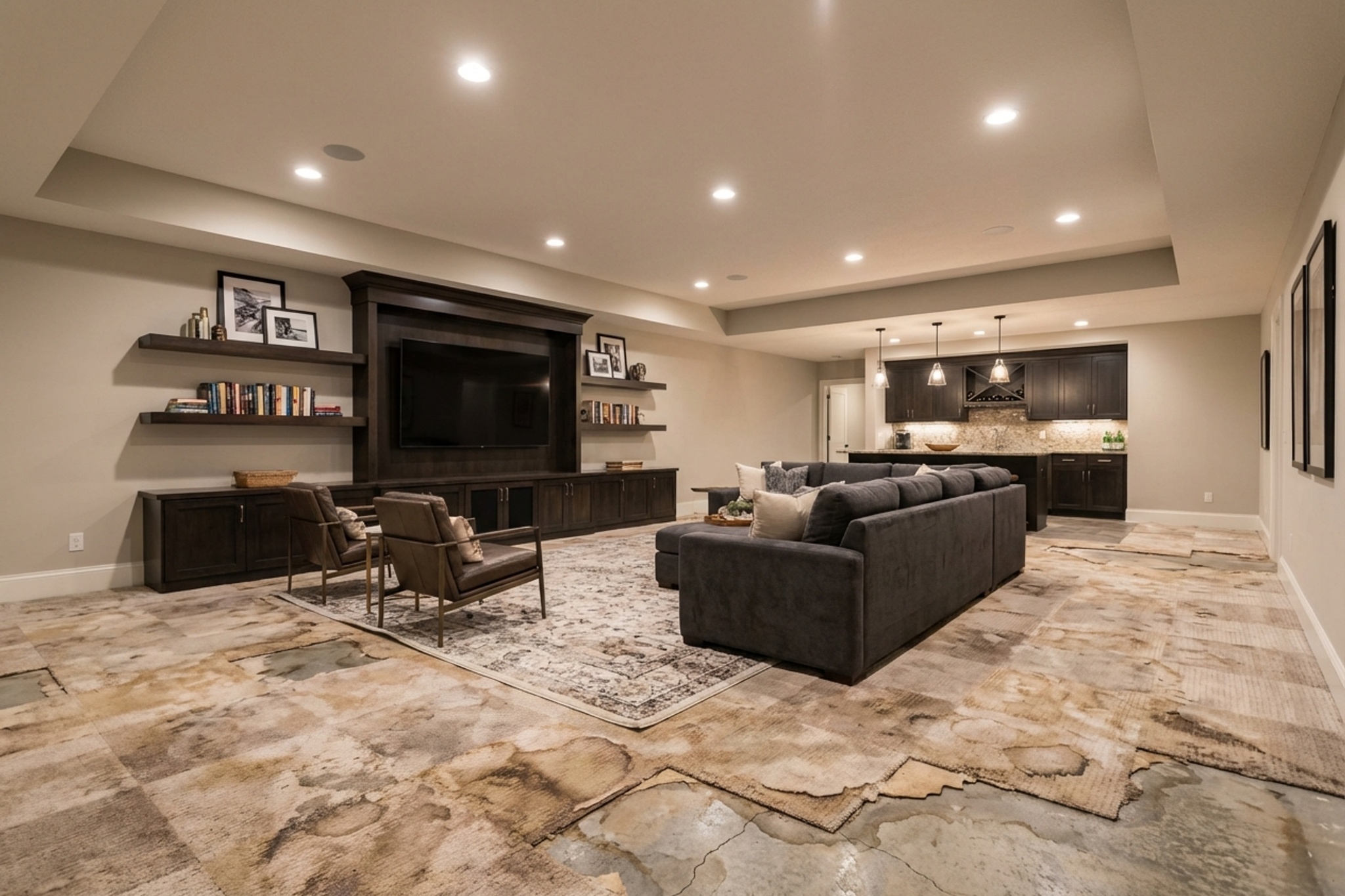

That is the picture a board can't give: this floor, in this room, next to these things. ShowFloor makes it from one photo in a few minutes.
Metallic Floors: Where a Board Falls Short
Metallic epoxy is where sample boards break down. The pigment moves as the floor is worked and as it cures, so no two pours come out the same. Jon Kopp, writing about metallic installs in Concrete Decor, put it plainly: "never make a sample board for a client," because no two metallic floors will ever be alike (Concrete Decor).
Kopp also noted that many metallic customers choose from pictures of floors they like. Those pictures show someone else's room. A board shows one patch of one pour. Neither one shows the customer's garage.
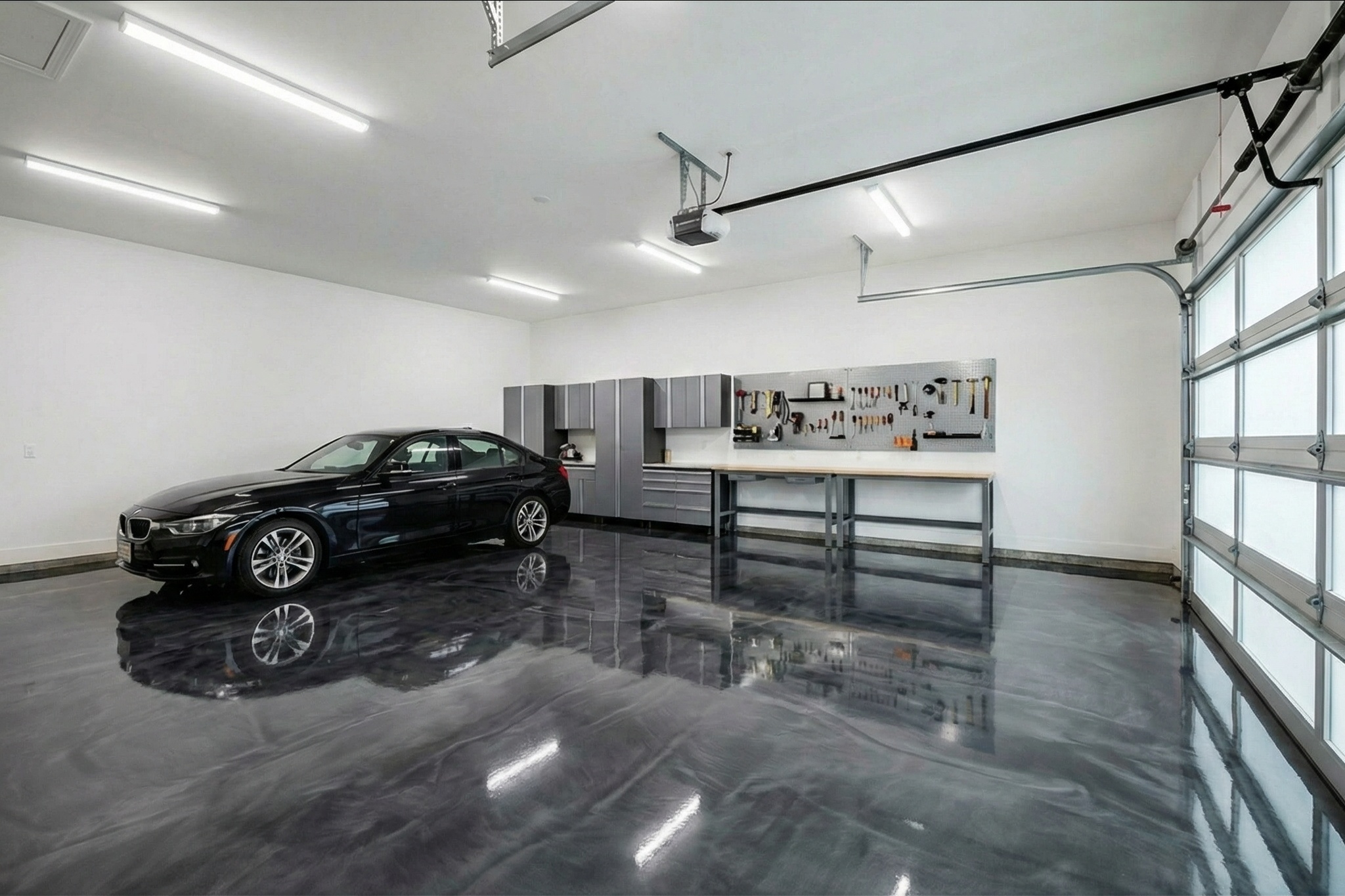
ShowFloor shows the metallic color and direction you would pour, across their own floor, in their own light. The exact movement is set by hand on install day, so say that when you show it. The customer is still choosing from a picture of their own room instead of a stranger's.
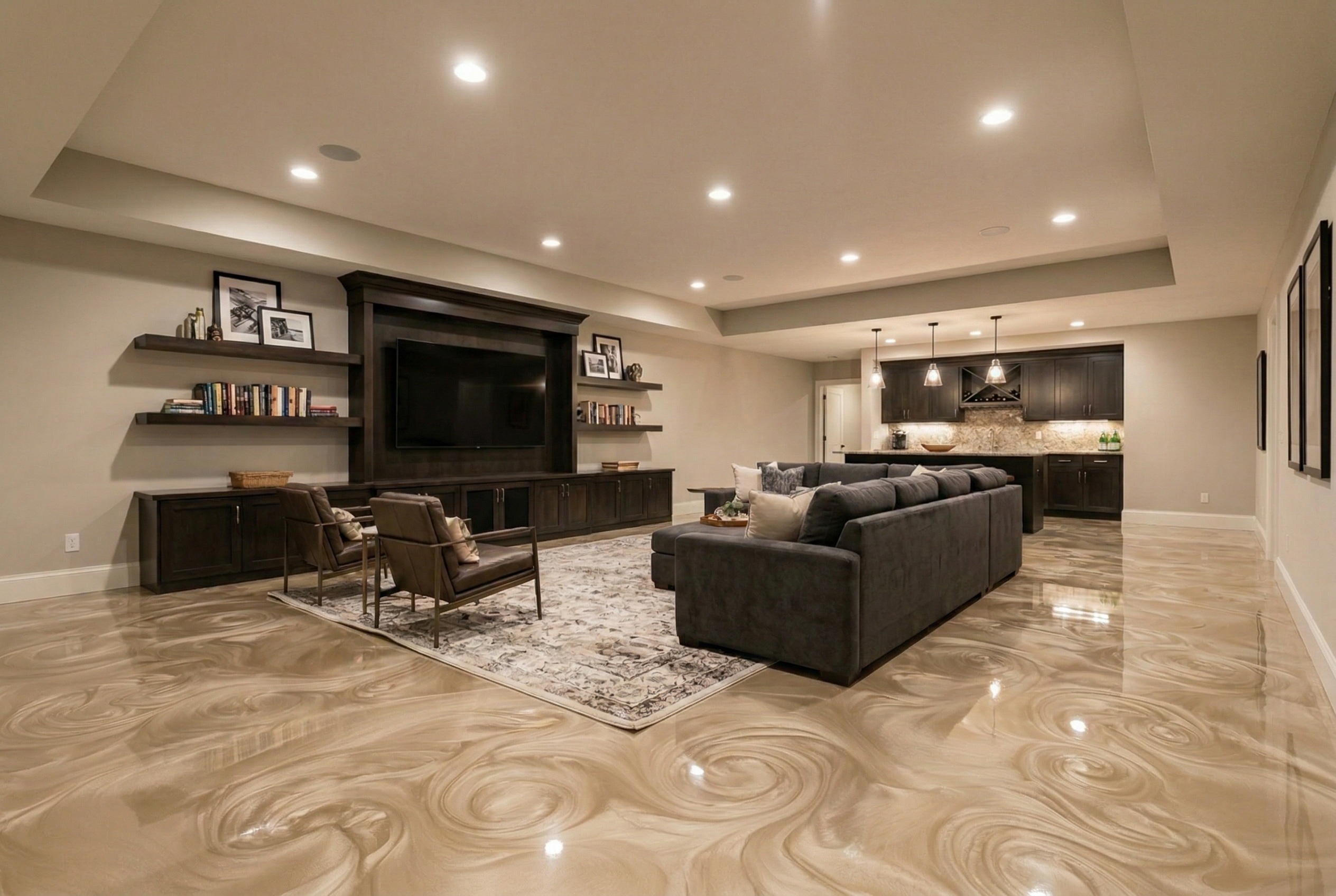
Sample Board vs. a Preview on Their Photo
Each one answers different questions. Use the board for the questions it can answer and the preview for the rest.
Which Tool Answers Which Question
| The customer asks | Sample board | ShowFloor preview on their photo |
|---|---|---|
| How does it feel to walk on? | Yes. Hand it over. | No. That needs the board. |
| How big are the chips? | Yes, at arm's length | Shows how the chips read across the whole floor |
| What will the whole floor look like? | No | Yes, across their entire garage |
| How will it look in my garage's light? | No. Only the light where they hold it | Yes, in the light of their photo |
| Will it go with my walls and cabinets? | No | Yes, next to their walls, cabinets and car |
| What would metallic look like? | Not reliably. No two pours match. | Shows the color and direction on their floor |
| Can my spouse see it tonight? | Only if you leave the board behind | Yes. It goes in the proposal. |
For the whole appointment in order, from booking to follow-up, see how to sell epoxy floors. The board covers touch. What the customer is actually deciding is in the right-hand column, and ShowFloor puts it on their own garage.
The Estimate Workflow: Board in Hand, Floor on Screen
Photograph the garage
One photo from the doorway with the whole floor in frame. Ask for it when they book, or take it when you arrive.
Show two or three options on that photo
In ShowFloor, pick the flake blends or metallic you would quote from the 1,000+ material catalog, or upload your supplier's swatch, and show each one across their garage. Hand over the board for those same blends so they can feel the texture.
Price each option
Give each option its own number and recommend one. Ranges are in the epoxy flooring cost guide. If they are still choosing a system, see best epoxy flooring for garages and floor coating systems compared.
Send the proposal
Once they pick, the proposal carries that option: the preview of their garage, the system by name, prep, scope and price.
Follow up on a set date
Put the dates on the calendar before you leave. Each follow-up carries the picture of their garage.
The board tells the customer how the floor feels. ShowFloor shows them the floor.
Sources
Sources were read in November 2026. Torginol's pages carry no publish date.
- Sample formats and sizes: Torginol, Now Available: Hard Samples and Custom Sample Decks (undated, read Nov 2026)
- Flake chip sizes: Torginol, Size Matters (FLAKE size that is...) (undated, read Nov 2026)
- Shop samples vs full scale: Concrete Decor, How an Experienced Concrete Contractor Explains Color Options to Customers (Oct 2013)
- Metallic sample boards: Concrete Decor, Metallic Epoxy Floors: How to Install, Control and Manipulate Them (Jan 2016)
- Light and color: Sherwin-Williams, Eight Expert Tips for Color Selection (read Nov 2026)
- Garage size and price ranges: ShowFloor epoxy flooring cost guide (Nov 2026)
Show the floor the board can't
Snap a photo of their garage, pick the blend from your sample board, and they see it across the whole floor in their own light. Try it on a photo of a current job.